
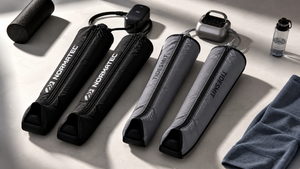

After a hard workout, the allure of slipping into a pair of compression boots is hard to resist. These devices promise to speed up recovery by squeezing your legs in a rhythmic pattern, and athletes from marathoners to weekend warriors have embraced them. Two names that come up often are the Tidesmit Leg Compression Recovery Boots, with their heated air massage, and the Hyperice Normatec 3, a lightweight, source-tested staple. But how do they really compare?
Recovery boots aren't just a wellness trend. Intermittent pneumatic compression (IPC) has a long history in medical and rehabilitation settings, and its migration to the consumer market has been backed by a growing body of research. Yet not all boots are created equal, and the choice between a heated, budget-friendly option and a proven, portable system can be tricky. Let's look at what sets them apart—and what the science says.
Why Compression Boots Are a Recovery Staple for Athletes
Intermittent pneumatic compression (IPC) has been used for decades in hospitals to treat conditions like lymphedema and to prevent deep vein thrombosis. The principle is straightforward: inflatable sleeves apply sequential pressure to the limbs, pushing blood and fluid back toward the heart. For athletes, that same mechanism is thought to help clear metabolic waste after intense exercise and reduce the feeling of heavy, tired legs.
As consumer devices, compression boots have become a go-to recovery tool. According to reviews by WIRED and Runner's World, many athletes report feeling less soreness and more ready for the next session after using them. The appeal is partly practical: you can sit and read or watch TV while the boots do the work. Unlike some wellness gadgets, IPC has a solid body of research behind it. Studies published in journals like the International Journal of Sports Physiology and Performance and Biology of Sport have examined how IPC affects blood flow and recovery markers. While the evidence is still evolving, it's enough to make these boots a staple in many training rooms.
At a Glance: Tidesmit vs. Hyperice Normatec 3
Before diving into the details, here's a quick side-by-side look at how the two boots compare on core features and trade-offs.
| Product | Best For | Key Feature | Caveat |
|---|---|---|---|
| Tidesmit Leg Compression Recovery Boots | Athletes who want warmth during recovery | Heated air massage | No third-party testing available; performance is unverified |
| Hyperice Normatec 3 | Athletes prioritizing portability and proven compression | Dynamic compression (40–110 mmHg), ~3-hour battery life | Central air compressor with hoses; not fully wireless |
What stands out most is the Tidesmit's heated air massage, a feature that none of the major source-tested rivals offer. But without third-party evaluations, it's harder to know how well that heat works in practice. Meanwhile, the Normatec 3 has been tested by multiple reviewers at WIRED, Wareable, and Runner's World, who consistently note its comfortable fit and reliable compression. The Normatec's use of a central compressor with hoses is a trade-off for its lightweight design, but it's one that many testers found acceptable.
What the Research Says About Compression Boots
The science behind IPC isn't just gym lore. A 2020 study in the International Journal of Sports Physiology and Performance used a randomized crossover design to measure hemodynamic effects in athletes, finding that IPC increased blood flow velocity in the lower limbs. Another comprehensive review in the Journal of Bodywork and Movement Therapies concluded that IPC may help reduce the perception of muscle soreness and improve recovery outcomes, though the authors noted that the quality of evidence varies. A systematic review and meta-analysis in Biology of Sport similarly reported that lower-limb IPC could modestly reduce delayed onset muscle soreness (DOMS) and enhance recovery of muscle strength after exercise.
These findings don't promise that any boot will slash your recovery time. The studies often use standardized protocols and medical-grade devices, not consumer boots. But they do suggest that the underlying concept has merit. In medical settings, IPC has long been used to manage conditions like chronic venous insufficiency and to prevent blood clots. Consumer boots aim to mimic those effects, albeit at lower pressures and with more user-friendly designs. As WIRED notes, unlike many wellness gadgets that make big promises with little evidence, IPC is grounded in decades of clinical use. Still, individual results will vary, and the best boot for you depends on fit, pressure range, and how you use it.
A Closer Look at Each Recovery Boot
Tidesmit Leg Compression Recovery Boots: Heated Recovery
A heated compression boot for athletes seeking warmth alongside recovery. The Tidesmit Leg Compression Recovery Boots stand out for their built-in heat function, which can add a soothing layer to the typical air compression experience. The heat is designed to relax muscles during the session, potentially making the process feel more like a spa treatment than a clinical routine. However, no third-party reviews or performance tests were found for this model. That means there's no independent verification of how evenly the heat distributes, how consistent the pressure is, or how well the boot fits across different leg sizes. If you're considering the Tidesmit, you'll want to check the sizing carefully and, if possible, test the fit to ensure the compression doesn't feel constricting or uneven. The heat is a comfort feature, not a substitute for effective compression, so the core massage performance should still be your priority.
Hyperice Normatec 3: Industry-Standard Dynamic Compression
A portable, source-tested boot with dynamic compression and extended battery life. The Hyperice Normatec 3 weighs just 3.2 pounds and delivers a pressure range of 40–110 mmHg across seven intensity levels. The battery lasts about three hours, enough for multiple 60-minute sessions, and the dynamic compression pattern—specifically the ZoneBoost feature—increases pressure in targeted areas of the leg. WIRED's testers found the Normatec 3 comfortable and easy to use, noting that the fit accommodated a wide range of leg shapes. Wareable's review highlighted the lightweight design and portability, though it pointed out the central air compressor and hoses, which make the system less streamlined than fully wireless competitors. The hose connection is a small concession: you'll need to be near the compressor unit, but the boots themselves are less bulky. For athletes who travel often, the Normatec 3 fits into a carry-on more easily than many full-size boots, making it a practical choice despite the tether.
What to Look for When Choosing Recovery Boots
When you're comparing recovery boots, these are the specifications that matter most:
- Pressure range. Look for a range that matches your comfort and recovery needs. Gentle settings around 20–50 mmHg are often enough for relaxation, while athletes may prefer 100–200 mmHg. The Normatec 3 spans 40–110 mmHg, which is a common middle ground. Some boots, like the Pulsio Compression Pro, max out at 250 mmHg, but higher isn't always better—excessive pressure can feel counterproductive.
- Heat. A heated boot may feel more soothing, but it's not a recovery enhancer. Heat can relax muscles superficially, but the core benefit comes from the compression itself. Consider it a comfort add-on, not a primary spec.
- Battery life and portability. If you plan to use the boots away from an outlet, check the battery life. The Normatec 3's roughly three-hour runtime is generous; some wireless models can run out of charge mid-session. Portability also matters: the Normatec 3's lightweight design wins over bulkier alternatives, but the separate compressor unit means you'll be tethered to it.
- Fit and sizing. A poor fit can undermine the whole experience. Boots that are too loose won't compress effectively, while ones that are too tight can feel constricting. Some one-size-fits-most designs may be too long for shorter users, as noted in reviews of the Urevo AI-Powered Wireless Recovery Boots. If possible, try the boots before buying, or look for detailed sizing guidance.
- Session length. Most boots offer sessions between 20 and 60 minutes. The ability to run for a full hour can be useful if you like longer recovery routines, but even 20-minute sessions can be effective for daily use.
Getting the Most Out of Your Compression Boots
Most manufacturers and reviewers suggest sessions of 20 to 60 minutes, often once or twice a day. If you're new to compression, start with a shorter session at a lower pressure to see how your body responds. The Normatec 3, for example, allows you to adjust intensity and zone focus, so you can gradually build up. Fit is critical: the boots should feel snug but not painful, and the zippers or closures should align correctly. If the boots bunch up or slide, the compression won't be distributed evenly. After each use, wipe the boots down with a damp cloth, especially if they have heating elements, to keep them clean and prevent bacterial buildup. Store them in a cool, dry place, and avoid tightly folding the air chambers.
