
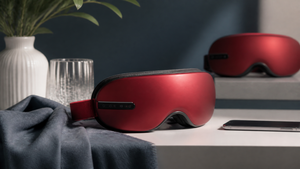

Red light therapy eye massagers sit at the intersection of two wellness trends: LED light treatment and targeted massage. They promise to soothe tired eyes, but the category is still young, and the devices vary wildly in what they actually do. Some focus on heat and vibration, others on specific wavelengths, and a few bundle in skincare patches. The Tidesmit Electric Eye Massager with Red Light Therapy Heat is one of the more straightforward options—it combines red light, warmth, and vibration into a single unit. To understand where it fits, it helps to look at the full landscape of red light eye massagers as reported by review sites, not by head-to-head lab testing.
Most of these devices are marketed for the same basic complaints: puffy eyes, dark circles, and the kind of fatigue that comes from staring at screens. But the way they tackle those problems—and the evidence behind them—differs. Some lean on red light wavelengths in the 630–660 nm range, which may interact with skin cells near the surface, while others use near-infrared around 880 nm to reach deeper tissue. Treatment times range from a few minutes per eye to 10-minute daily sessions, and extras like hydrocolloid patches or hands-free masks change the experience entirely. Knowing what you're actually buying means looking past the buzzwords.
Understanding Red Light Eye Massagers
A red light eye massager is a wearable device that uses low-level light—often from LEDs—along with massage elements like vibration, air pressure, or heat. The idea is to combine two approaches: light therapy, which some research suggests may influence cellular energy production, and physical stimulation, which can temporarily ease the sensation of tension around the eyes. According to sources like TopConsumerPick and Best5ReviewExpert, these devices are often used to address screen-induced eye fatigue, morning puffiness, and under-eye bags, though the evidence for lasting changes is mixed.
Most recommendations suggest a general protocol of 2–3 minutes per eye, 2–3 times a week, but some devices call for longer sessions. The SMOOTHSKIN Red Light Eye Massager, for example, is designed for 10-minute daily treatments. Cleanliness is a practical concern: the soft pads that touch the skin can trap bacteria if not wiped down regularly, a pain point noted in several user-reported reviews. It’s worth remembering that no device guarantees results, and what works for one person’s puffiness might not budge another’s dark circles. The appeal is often in the ritual itself—a few minutes of warmth and gentle pressure that feel like a break from the day.
Key Differences to Consider
Not all red light eye massagers are built the same. The wavelength of light matters, as does the presence of heat, the type of massage, and whether you’re dealing with a hands-free mask or a handheld device. The table below draws on source-reported information from TopConsumerPick and Best5ReviewExpert to lay out the trade-offs. It’s not a ranking; it’s a snapshot of what each product emphasizes, according to reviewers who’ve used them.
| Product | Best For | Source-Reported Strength | Caveat |
|---|---|---|---|
| Tidesmit Electric Eye Massager | Screen fatigue and relaxation | Combines red light, heat, and vibration in one device | No specific wavelength or treatment time claims; less data on dark circle reduction |
| Eyviola LED Photon Therapy Eye Massager | Rapid dark circle improvement | 630nm red LED; source reports visible dark circle reduction in 14 days | Individual results vary; higher expectations may not be met |
| SMOOTHSKIN Red Light Eye Massager | Complete skincare kit | Includes 24 hydrocolloid patches; 10-minute daily sessions | Patches add ongoing cost; not a hands-free design |
| Solawave 4-in-1 Red Light Therapy Eye Mask | Hands-free, deeper wavelength | 880nm near-infrared; mask form factor | Treatment time not specified for this model; Solawave’s other devices use 3-minute sessions |
| Iwtfu Under Eyes Red Light Massager Glasses | Budget-friendly simplicity | Glasses-style design; weighs just a few ounces | Source indicates less advanced technology; may not match higher-end features |
The table won’t tell you which one is “best,” but it can help you zero in on what you care about most. If you want a short, warming massage after a long day, the Tidesmit’s simplicity might be enough. If you’re chasing a more dramatic cosmetic change, the Eyviola’s 14-day claim—however source-bound—is harder to ignore. The Solawave’s near-infrared wavelength is a different beast entirely, and the SMOOTHSKIN brings a skincare element that some users will find useful and others will see as an extra expense.
In-Depth Look at Each Device
Each of the five devices here has been reviewed by consumer sites, and while the details come from those sources rather than our own testing, the patterns are clear enough to make an informed choice. Here’s what the reviewers say about how they work, where they shine, and what they leave out.
Tidesmit Electric Eye Massager: For Heat and Vibrating Massage
The Tidesmit is a straightforward electric eye massager that layers red light therapy with heat and vibration. Reviews describe it as a device built for relaxation, not for delivering a specific light dose. It’s meant to be worn over the eyes, and the combination of warmth and gentle vibration can feel like a reset for tired eyes after hours of screen work. Unlike some of the other devices, it doesn’t come with hydrocolloid patches or make claims about dark circle reduction timelines. That’s not necessarily a weakness—it just means the Tidesmit is more about immediate comfort than a 14-day transformation. If you’ve ever rubbed your temples after a long Zoom call, you get the appeal. The lack of a stated wavelength might bother someone who wants to cross-reference with research, but for daily use, the sensation may be the real draw.
Eyviola LED Photon Therapy Eye Massager: For Rapid Dark Circle Reduction
Eyviola’s device uses 630nm red LED and what the brand calls photon therapy. The standout claim from review sources is that visible dark circle reduction can show up in 14 days—a specific, if ambitious, promise. One reviewer noted that the Eyviola “combines multiple technologies for dramatic improvements,” setting it apart from single-function massagers. That doesn’t mean results are guaranteed; the 14-day figure is source-reported, and individual responses to light therapy can be inconsistent. Still, if you’re someone who’s tried plenty of creams and serums with no lasting effect, this kind of targeted approach may feel like a different path. The device itself is worn like glasses, and the 630nm wavelength sits in the range that’s commonly used for superficial skin concerns. It’s not a hands-free mask, but the design doesn’t require much effort once it’s on.
SMOOTHSKIN Red Light Eye Massager: For a Complete Skincare Kit
Where the Tidesmit keeps things simple, the SMOOTHSKIN adds a physical skincare component: 24 hydrocolloid patches that you place under the eyes before treatment. The device is designed for 10-minute daily sessions, and the patches are meant to deliver ingredients like hyaluronic acid and peptides while the red light does its work. Reviewers describe it as a two-in-one system—light therapy plus a topical treatment—that might appeal to people who already use under-eye patches and want to combine steps. The catch is the recurring cost of the patches, and the fact that you’re committing to a daily 10-minute block. For some, that’s a calming ritual; for others, it’s a chore. But the SMOOTHSKIN’s approach is hard to find elsewhere, and the source-reported feedback suggests it’s a solid pick for anyone who likes the idea of a “treatment kit” rather than a single gadget.
Solawave 4-in-1 Red Light Therapy Eye Mask: For Hands-Free Treatment
The Solawave 4-in-1 takes a different form: a mask that wraps around the eyes, leaving your hands free. It uses 880nm near-infrared light, which penetrates deeper than the visible red wavelengths used by most of the other devices. This wavelength is associated with reaching deeper tissue, which could theoretically address more than just the skin’s surface, though the source doesn’t claim specific anti-aging results. Treatment times for this model aren’t spelled out, but Solawave’s other eye massagers use 3-minute sessions. The mask design means you can lie back and let it run, and the near-infrared is less likely to be visible as a bright glow, which might be more comfortable for some. It’s a different experience from the massaging, vibrating devices—less about sensation, more about passive light exposure. The trade-off is that you don’t get the kneading warmth that the Tidesmit provides, so if you’re after that physical release, the mask might feel too hands-off.
Iwtfu Under Eyes Red Light Massager Glasses: For a Budget-Friendly Option
Iwtfu’s offering is a glasses-style massager that the review sources describe as less technologically advanced than the higher-ranked options. Weighing just a few ounces, it’s portable and unobtrusive, and it provides red light therapy without heat or vibration. The source notes that it’s a no-frills device, and that’s the point—if you’re curious about red light for the eyes but don’t want to spend much, this might be the entry point. You won’t get the deep wavelength of the Solawave or the patch system of the SMOOTHSKIN, but for a simple, lightweight pair of glasses that emit red light, it does the job. The source comparison suggests that the technology is not as powerful, so expectations should be calibrated accordingly. Think of it as a starter device, not a long-term solution for stubborn dark circles.
Choosing the Right Device for Your Needs
Your choice will come down to what you’re actually trying to address. If you mostly want to unwind after a day of screen time, the Tidesmit Electric Eye Massager makes sense—heat and vibration are immediate, and the red light is a bonus. For those who are laser-focused on dark circles and willing to wait two weeks, the Eyviola’s source-reported 14-day claim is a compelling data point, even if it’s not a guarantee. The Solawave 4-in-1 appeals to anyone who wants a hands-free session and is curious about near-infrared depth; the mask form factor is genuinely different from the others. And the SMOOTHSKIN is for people who already use patches and want to integrate light therapy into that routine. The Iwtfu is the budget pick, plain and simple, and it’s best for casual experimentation. None of these devices is universally better—they just solve different problems, and the source comparisons make that clear.
Usage Tips for Best Results
Stick to the treatment times that match your device. The general protocol suggests 2–3 minutes per eye, 2–3 times a week, but the SMOOTHSKIN’s design calls for 10-minute daily sessions, and Solawave’s other products use 3-minute treatments. Overdoing it won’t speed up results; it might just irritate the skin around your eyes. Clean the device regularly—the soft pads can harbor bacteria, and a simple wipe with a gentle cleanser after each use is a low-effort way to avoid problems. Consistency matters more for eye fatigue than for dark circles, and using the device when you actually feel the strain is more practical than forcing a rigid schedule. If you’re pairing it with a skincare routine, go ahead, but don’t expect the combination to produce a dramatic synergy. The sources don’t promise that, and neither should you.
Final Verdict: How Does the Tidesmit Stack Up?
The Tidesmit Electric Eye Massager holds its own by not overpromising. It gives you heat, vibration, and red light in a single device, and it’s built for relaxation rather than cosmetic transformation. Compared to the Eyviola, it doesn’t claim to reduce dark circles in 14 days. Compared to the SMOOTHSKIN, it doesn’t come with patches. It’s a simpler tool, and for some, that’s a strength. The Solawave’s 880nm near-infrared might be more relevant for anti-aging concerns, but the Tidesmit’s physical massage can feel more immediately restorative. In the source-reported comparisons, it’s positioned as a good value for anyone who wants a multifunctional massager without the extra accessories or specific wavelength promises. If that’s what you’re after, it’s a sensible pick. Just remember that all the claims here come from review sites, not from clinical studies, and your own experience could be different. That’s the nature of the category—personal, a little uncertain, and always worth a careful look before you buy.
