
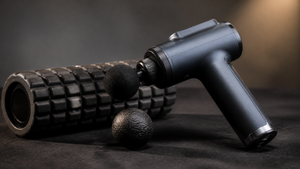

Tidesmit 30-Speed Massage Gun: Verdict
Without published stall force or amplitude, the Tidesmit 30-Speed Professional Massager can’t be stamped as a legitimate deep tissue tool. The 30 speeds catch the eye, but the data that matters—the motor’s ability to push back under pressure—is absent from the sources we reviewed. Industry benchmarks from Peak Primal Wellness peg athlete-grade stall force at 40–60 lbs, and Massage Gun Lab highlights amplitude of 12mm or more as the minimum for reaching deep muscle. If the Tidesmit meets those numbers, it could be a bargain. If it doesn’t, the 30 speeds are just window dressing.
This is a spec-based assessment, not a hands-on test. The verdict leans on the manufacturer’s own claims, which you’ll need to pull from the product page. Time and again, budget guns that skip publishing stall force end up disappointing users who press into a knot and feel the motor quit. The Tidesmit might be different, but the safe assumption is that it’s a consumer-grade massager until proven otherwise.
Who Is the Tidesmit Massage Gun For?
The Tidesmit is aimed at people who want control over their percussive therapy without breaking the bank. With 30 speed settings, it lets you dial in a gentle flutter or a rapid-fire thump. That flexibility is uncommon in this price bracket. But the real question is whether it can handle the kind of pressure that deep tissue work demands—the kind that finally loosens up a knot that foam rolling misses.
If the Tidesmit’s stall force sits in the athlete-grade range, it could serve athletes and anyone with dense, stubborn muscle. If it’s closer to the consumer-grade 30-lb ceiling, it’s better suited for light warm-ups and relaxation. The gun’s deep tissue marketing is a promise; the specs are the proof. Until the manufacturer publishes them, the most sensible user is someone who values versatility and low cost, but isn’t relying on maximum percussive depth.
Deep Tissue Performance: Stall Force and Amplitude
Stall force is the motor’s fight. It’s the amount of pressure you can apply to the massage head before the motor stalls. Amplitude is the stroke—how far the head travels in and out, measured in millimeters. Peak Primal Wellness notes that consumer-grade guns top out around 30 lbs of stall force, while athlete-grade tools need 40–60 lbs to keep hammering when you lean in. Massage Gun Lab’s testing shows that amplitude below 12mm often delivers only surface buzz, not the deep, thumping percussion that releases tight fascia.
The Tidesmit’s 30 speeds sound like a performance feature, but speed alone doesn’t dig deep. A gun with high percussions per minute but weak stall force is like a fast-spinning drill that stops the moment it hits hardwood. The Hypervolt 3 Pro sets a high bar: 14mm amplitude and a stall force around 70 lbs, turning it into a quiet, pro-grade tool. The ReAthlete PulseMax offers 55 lbs and 15mm at a top speed of 3,200 PPM. Even the Urikar AT1, advertised at 65 lbs but independently tested closer to 60 lbs, shows that the numbers can wobble. Without the Tidesmit’s own figures, no honest comparison is possible.
If you’re eyeing the Tidesmit, check the product listing for stall force and amplitude. If those numbers are missing, treat it as a consumer-grade massager. The deep tissue label is earned, not printed on the box.
Trade-offs and Considerations
Deep tissue massage guns, even the good ones, come with compromises. Weight is a common gripe. The Hypervolt 2 Pro weighs 2.1 lbs, and something like the Mebak 3 shaves that to 1.68 lbs. If the Tidesmit is on the heavier side, treating your own upper back can turn into a contortion act. A handle that’s too large for smaller hands only makes it worse.
Battery life is another variable. Guns with thermal features, like the RENPHO Active Thermacool 2, drain power faster when heat is running. If the Tidesmit includes any heating or cooling element, expect shorter sessions between charges. Noise is a social barrier. A gun that whines at 70 dB can disrupt a gym environment or wake the household during a late-night recovery session. The category also has a credibility problem: TimTam once advertised 20mm amplitude without publishing stall force, leaving buyers to guess what they were actually getting. Spec inflation is real.
Consider whether the Tidesmit’s design works for the areas you need to reach. Self-treatment often means awkward angles, and a gun that doesn’t balance well or feels slippery in hand can turn a recovery tool into a chore. These aren’t confirmed flaws of the Tidesmit—they’re the trade-offs that come with the territory, and they’re worth checking against the manufacturer’s details before you buy.
Alternatives to the Tidesmit
If the Tidesmit’s specs remain a mystery, or if you simply want a deep tissue gun with numbers you can trust, a handful of proven competitors stand out. The table below lines up the Tidesmit against four models with published stall force and amplitude data. The Tidesmit row is a placeholder—no verified specs were available from the sources we reviewed.
| Product | Best For | Source-Reported Amplitude | Source-Reported Stall Force | Caveat |
|---|---|---|---|---|
| Tidesmit 30-Speed | Deep tissue (specs unverified) | Not published | Not published | Check manufacturer for specs |
| Hyperice Hypervolt 3 Pro | Professional quiet deep tissue | 14mm | ~70 lb | Heavier at 2.1 lbs |
| ReAthlete PulseMax | High-speed percussion | 15mm | 55 lbs | Lower stall force than Hypervolt; 3,200 PPM |
| Opove M3 Pro 2 | Long battery life, high stall force | Not specified in sources | 70 lbs | Heaviest at 2.4 lbs |
| Urikar AT1 | Cost-effective deep tissue | Not specified | Advertised 65 lb, tested ~60 lb | Amplitude unverified |
Hypervolt 3 Pro: 14mm Amplitude and ~70 lb Stall Force
The Hyperice Hypervolt 3 Pro is a quiet powerhouse. At 51dB, it’s one of the least disruptive pro models, and the ~4-hour battery life holds up through multiple sessions. Its 14mm amplitude and 70-lb stall force make it a benchmark for deep tissue. The trade-off is weight—2.1 lbs can feel heavy during an extended self-massage, but the performance is hard to argue with.
ReAthlete PulseMax: 55 lbs Stall Force at 3,200 PPM
The ReAthlete PulseMax pairs a 15mm amplitude with 55 lbs of stall force and a top speed of 3,200 PPM. That rapid-fire percussion can feel more aggressive than the Hypervolt, even though the stall force is lower. For athletes who want a quick, high-frequency session without sacrificing depth, the PulseMax is a solid athlete-grade alternative. It hits the 40–60 lb threshold and doesn’t pretend to be something it’s not.
Opove M3 Pro 2: 70 lbs Stall Force and Long Battery Life
The Opove M3 Pro 2 matches the Hypervolt 3 Pro’s 70-lb stall force but stretches battery life to 4–8 hours. At 2.4 lbs, it’s the heaviest in this set, which might be a dealbreaker for smaller users. However, that weight comes with a motor that won’t flinch under pressure. It lacks the FDA registration or study backing of some competitors, but for raw, sustained power, it’s a strong performer.
Urikar AT1: Tested ~60 lb Stall Force
The Urikar AT1 claims 65 lbs of stall force, but independent testing found it closer to 60 lbs. That still lands it squarely in the athlete-grade zone, and it often comes at a lower price than the Hypervolt. The missing amplitude number is a caveat; without it, you can’t be sure how deep the percussion truly reaches. If you’re budget-conscious and can verify the amplitude, the AT1 is worth a look.
Frequently Asked Questions About Deep Tissue Massage Guns
What stall force is needed for deep tissue massage?
Consumer-grade guns stall at 30 lbs or less. Athlete-grade tools need 40–60 lbs to keep working when you press into a knot. Peak Primal Wellness frames that as the minimum for real deep tissue. Without that pushback, the motor quits just when you need it most.
Is amplitude or stall force more important?
They’re a pair. Amplitude sets the percussive depth; stall force keeps the motor from fading under pressure. A gun with 16mm amplitude but weak stall force can’t sustain deep hits. A strong motor with shallow amplitude only buzzes the surface. Both need to be in the right range.
How does heat therapy help with deep tissue massage?
Heat can increase blood flow and relax muscle before percussion, making the treatment feel less jarring. The RENPHO Active Thermacool 2, endorsed by the International Massage Association, combines heat and percussion. The downside: battery life drops noticeably when heat is active, a practical trade-off.
