
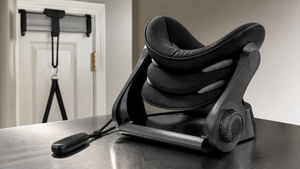

Some people turn to a door-mounted neck stretcher for a few minutes of relief from daily tension. The Tidesmit 3-Level Adjustable Cervical Neck Traction Massager falls squarely into that category—a portable, over-the-door device with three angle presets. It’s designed to let you tilt your head back and let gravity gently pull on the cervical spine, no electricity or pumps required. Reviews compiled by sources like drunvalo.net suggest it can offer a temporary easing of stiffness, but the experience varies from person to person. We’ll look at what the available evidence says about how well it works, who it’s for, and how it compares to a few common alternatives.
Verdict: Is the Tidesmit Worth It?
The Tidesmit is a straightforward, no-frills traction device that may help ease mild neck tension, especially if you’re dealing with stiffness from desk work or poor sleep. Its main strengths are the three adjustable angles, quick setup, and the ability to take it anywhere. Source-reported user feedback from kiddofspeed.com highlights the convenience of a system that packs flat and can be used in a hotel room or at the office. The device is best suited for people looking for a non-invasive, manual traction option—not a replacement for clinical care. The lack of a pressure gauge means you’ll rely on feel to gauge the right pull, which can be a learning curve. While the relief is temporary, many users report that a short session loosens up a stiff neck. It’s a reasonable entry point if you’re curious about at-home traction, but it’s not built for serious spinal conditions.
Who Should Consider the Tidesmit?
If you spend long hours at a desk, wake up with a tight neck, or deal with travel-related tension, the Tidesmit’s over-the-door design may be a practical fit. It’s made for people who want a quick traction session without lying down or using a complicated machine. According to kiddofspeed.com, the device is easy to set up almost anywhere, and some users keep one at the office for a midday stretch. The three fixed angles give you a bit of range, but very large or very small neck sizes might not find a comfortable fit. This device is generally geared toward mild to moderate stiffness—not acute injuries, whiplash, or diagnosed disc problems. If your discomfort is persistent or severe, a healthcare provider’s advice is the safer route.
Design and Adjustability: What Sets It Apart
The standout feature is the three-level angle adjustment, which lets you shift between flatter and steeper inclines. A flatter setting tends to target the upper cervical spine, while a steeper one reaches lower down—a useful distinction if you want to direct the stretch. The device uses a foam support that cradles the back of the head, with straps that loop over a sturdy door and attach to the foam. You sit in a chair, lean back, and let gravity do the work. Sources like drunvalo.net and kiddofspeed.com report that setup is straightforward: anchor the strap, adjust the length, and you’re ready. The whole unit is light enough to toss in a bag, which is a plus for travel or moving between rooms.
There’s no pressure gauge or force indicator, though. Unlike some pneumatic units that display exactly how many pounds of force you’re applying, the Tidesmit relies on your own sense of tension. As smartshoppingreviews.com notes, this is a common pain point with manual traction devices—you have to estimate the pull, and getting it right often takes a few tries. The foam itself is described as firm but reasonably comfortable, though some users may find the jaw or chin rest position less than ideal during longer sessions. The three angles are fixed, so you can’t fine-tune beyond those presets. Still, for a device that needs no electricity and stores flat, the Tidesmit offers a decent range of adjustability.
What the Reviews Say: User Experiences
Across the reviews aggregated by drunvalo.net, many users report a noticeable stretch and a reduction in stiffness after a few minutes of use. Some say it helps with morning neck tightness or after a long day at the computer. The portability and quick setup are frequently mentioned as positives—you can use it while watching TV or in a hotel room. On the other hand, kiddofspeed.com notes that a few users found the angle presets didn’t match their anatomy perfectly, leading to pressure on the jaw or discomfort at the back of the head. The foam padding, while generally comfortable, may not hold up well over time for everyone; a handful of reviewers mentioned the foam losing its shape or the strap slipping.
The lack of a pressure gauge is a recurring theme, with some users wishing they had a clearer idea of how much force they were applying. Most describe the relief as temporary—lasting an hour or so after a session. No serious safety issues have been reported, but overdoing it can cause soreness. User experiences suggest starting with the middle angle and short sessions to see how your neck responds. Those who like the device tend to use it consistently, not as a one-off fix, and they appreciate the ability to switch angles when one spot feels overworked.
Limitations and Trade-offs
The Tidesmit’s biggest limitation is precision. Without a pressure gauge, you can only guess the force you’re applying. The three fixed angles are helpful, but they don’t offer the infinite adjustability of a pneumatic device or a clinical unit. For some users, neck size may also be an issue—those with very thick or very thin necks might find the foam support doesn’t sit quite right. When compared to higher-end devices like the iSTIM WeTrac (which can deliver a calibrated 50 lbs of force), the Tidesmit is clearly a more basic tool. It trades that precision for portability and simplicity.
Over-the-door traction is generally not recommended for severe neck pain, bulging discs, or conditions like spinal stenosis without professional guidance. The device is best viewed as a supplemental comfort tool, not a treatment. If you have a diagnosed condition or experience radiating pain, numbness, or tingling, a healthcare provider’s input is essential. The trade-off is convenience versus control: the Tidesmit gives you a quick, portable stretch, but it won’t replace a session with a physical therapist or a more sophisticated home traction kit.
How It Stacks Up Against Alternatives
iSTIM WeTrac Cervical Traction Device
A mid-range option with precise force control. The WeTrac uses a hand pump to deliver up to 50 lbs of traction, with a built-in timer and pressure gauge. That addresses the Tidesmit’s main weakness—you know exactly how much pull you’re getting. drunvalo.net positions it between budget foam pillows and clinical units, making it a step up for those who want more control. It’s bulkier, though, and the setup is more involved. If you need consistent, measurable traction and don’t mind spending a few extra minutes, the WeTrac is a stronger choice, but the Tidesmit wins on grab-and-go simplicity.
Budget Inflatable Collars (e.g., AUVON)
Affordable, portable, but with mixed durability. Inflatable collars like the AUVON use manual inflation to create a stretch around the neck. They can be taken anywhere, but many suffer from air retention issues and flimsy build quality. The Tidesmit’s over-the-door design avoids those air-leak concerns entirely, and its foam support may hold up better over time. However, the AUVON’s triple-layer design offers graduated pressure control that the Tidesmit’s fixed angles can’t match. If you need a truly portable, self-contained stretch and don’t mind a less durable product, an inflatable collar might work; the Tidesmit is generally more reliable but less versatile in pressure adjustment.
Over-the-Door Hammock-Style Stretchers (e.g., comness)
Simple, passive traction for daily use. Devices like the comness use a water bag weight system to provide a steady pull, without any active adjustment. They’re often cheaper and require no manual tweaking once set up. However, they don’t offer the angle customization that the Tidesmit’s three levels provide. kiddofspeed.com notes that over-door hammocks are sometimes not enough for acute flare-ups, whereas the Tidesmit’s adjustable angles might deliver more targeted relief. The comness is a set-it-and-forget-it option for daily maintenance, while the Tidesmit gives you more flexibility to shift the focus of the stretch depending on your needs that day.
