
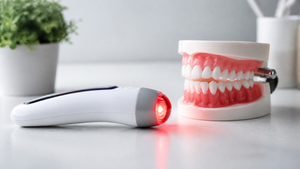

Gum disease affects nearly half of adults over 30, according to the Oralucent blog. Standard treatments like scaling and root planing form the backbone of periodontal care, but the search for supportive at-home strategies has led many to explore red light therapy. The NovaaLab article explains how specific wavelengths of red light can influence cellular activity, but how does this translate to gum health, and what is a device like the Tidesmit 660nm unit actually doing? This article breaks down the mechanism, the evidence, and the practical considerations.
How Red Light Therapy Works for Gum Tissue
The process is called photobiomodulation (PBM). When 660nm red light penetrates the gum tissue, it is absorbed by the mitochondria in your cells. This absorption boosts the production of adenosine triphosphate (ATP), the primary energy currency of the cell. With more energy available, cells can function more effectively to reduce inflammation and promote healing. Importantly, the NovaaLab article emphasizes that this is an adjunctive therapy. It does not generate heat, and it does not reverse gum recession or cure advanced periodontitis on its own.
What the Evidence Says About Red Light Therapy for Gum Disease
The current body of evidence is encouraging but far from definitive. Researchers have explored PBM for decades, and three specific studies are frequently cited in the discussion around gum health.
NASA Study on Wound Healing (2001)
This foundational study, led by Whelan and colleagues, investigated the effect of red light on wound healing. Although it was not specifically a gum disease study, it provided critical early evidence that red light could accelerate tissue repair at the cellular level.
2017 Systematic Review and Meta-Analysis
A 2017 review published in Photodiagnosis and Photodynamic Therapy analyzed multiple studies on light therapy for periodontal disease. According to the Red Light Therapy Find article, the review concluded that light therapy may be a beneficial add-on to scaling and root planing, with improvements noted in probing depth and bleeding on probing. However, the authors highlighted significant heterogeneity among the included studies, making it difficult to draw universal conclusions.
2022 Clinical Trial of a Dual-Light Home Device
The Oralucent article describes a more recent clinical trial testing a home device that combined red and blue light. The trial compared the dual-light device plus standard care against standard care alone. Results showed better outcomes in inflammation control and pocket depth reduction for the device group. The catch is that the study was small and specific to that particular device, so the results are suggestive, not conclusive.
How Red Light Therapy Compares to Standard Gum Disease Treatments
Red light therapy is not a standalone solution. It works best when compared as an adjunct to mechanical cleaning, not as a replacement. Here is a quick breakdown of how it fits alongside conventional approaches.
| Treatment | Primary Action | Role of Red Light Therapy |
|---|---|---|
| Scaling & Root Planing | Mechanical removal of biofilm | Adjunctive: may reduce inflammation post-cleaning |
| Antibiotics | Systemic or local bacterial reduction | Non-antibiotic option for mild/moderate cases |
| Periodontal Surgery | Access to deep pockets, bone grafting | Limited penetration depth; supports healing after surgery |
For pockets deeper than 6mm, external light struggles to reach the bottom of the pocket. This is where professional cleaning and surgical intervention remain essential.
Using an At-Home Red Light Device for Gum Health
If you decide to try an at-home red light device, consistency and safety matter. Typical sessions last between 2 and 10 minutes, with the device held about 1 to 2 inches from the gums. Daily use is common, but the Oralucent article advises checking the manufacturer's instructions. Safety precautions include avoiding direct eye exposure and keeping the device clean. Most importantly, it should complement, not replace, your regular brushing, flossing, and dental visits.
Tidesmit 660nm Red Light Therapy Unit: An At-Home Option
The Tidesmit 660nm Red Light Therapy Unit is designed for targeted gum application. Its 660nm wavelength falls within the therapeutic range for photobiomodulation, aiming to support the body's natural healing processes in inflamed gum tissue. As a portable device, it fits into a daily routine, but it is crucial to view it as part of a broader gum care strategy alongside professional oversight. It is not a substitute for professional dental treatment, and the evidence for at-home devices, while promising, does not yet match the robust data behind established clinical procedures.
