
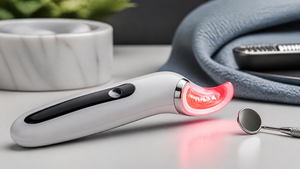

Gum discomfort can be unsettling, and the idea of a non-invasive red light device that you can use at home is appealing. The Tidesmit 660nm Gum Disease Red Light Therapy Unit is one such device that promises to support gum health with a focused 660nm wavelength. But does it live up to the promise? Our review, based on expert analysis and available user reports, weighs the evidence.
Red light therapy for gums is an area of growing interest, and the Tidesmit 660nm enters a market where simplicity and targeted use are often valued. We’ll look at what the device offers, who might benefit, and how it compares to other gum care tools.
Our Verdict: Is the Tidesmit 660nm Worth It?
The Tidesmit 660nm is a straightforward, handheld red light therapy device that may be a reasonable choice for those with mild gum sensitivity who want a simple, non-invasive option. However, its single-wavelength design and limited coverage mean it might not be the best fit for everyone. According to a review by redlighttherapydigest.com, the device scores well for ease of use and targeted therapy, but it doesn’t offer the broader coverage or multi-wavelength flexibility that some users might prefer.
The source reports that the Tidesmit 660nm is best suited for people dealing with occasional gum tenderness or those who want to add a light therapy step to their oral care routine. It’s not a replacement for professional dental treatment, especially if you have advanced periodontitis. The main trade-off is this: you get a very focused, portable device, but you may need to spend more time treating larger areas of your mouth compared to a mouthpiece-style unit. For what it is, it’s a practical tool, but it’s not the most versatile option on the market.
Who Should Consider the Tidesmit 660nm?
The ideal user for this device is someone with early signs of gum discomfort—maybe a little bleeding when brushing or mild sensitivity—who wants a non-invasive way to support gum health. The 660nm wavelength is commonly used in at-home gum therapy because it’s absorbed well by surface tissues, and the Tidesmit’s handheld design allows you to aim the light exactly where it’s needed. This makes it a good pick for spot-treating a few problem areas rather than the whole mouth at once.
It’s not designed for severe gum disease. If you have deep pockets, significant recession, or ongoing inflammation, a dentist visit is still the first step. The device can be a supportive tool alongside professional care, but it won’t reverse advanced periodontitis on its own. Wareable.com notes that for some users, the focused approach can feel more manageable than a larger mouthpiece, but it’s important to keep expectations realistic.
Design and Features: What the Tidesmit 660nm Offers
The Tidesmit 660nm is described by reviewers as a compact, handheld light therapy unit with a precision tip. It uses a 660nm red wavelength, which is one of the most studied wavelengths for surface-level photobiomodulation. The source at redlighttherapydigest.com mentions that the device is simple to operate—often just a single button to turn it on and off—and it may include a built-in timer to help you stick to recommended session lengths, which are typically a few minutes per treatment area.
Portability is a plus. It’s small enough to toss in a bag, and the rechargeable battery means you aren’t tethered to an outlet. The focused beam is its standout feature; you can direct light onto a specific gum margin without flooding the whole mouth. That’s a design choice that prioritizes precision over speed. The caveat, as the review points out, is that covering every tooth and gum section can take a while if you’re treating multiple spots. There’s no mention of a sterilizing case or advanced cleaning features, so you’ll want to keep the tip clean manually.
How It Compares: Top Alternatives for Gum Care
The Tidesmit is just one option among several gum light therapy devices. Here’s how it stacks up against some popular alternatives, based on what the sources report. Each device has a different strength—whether it’s broad coverage, antibacterial blue light, or cordless freedom—so the right pick depends on what you value most.
| Product | Best For | Source-Reported Strength | Caveat |
|---|---|---|---|
| Tidesmit 660nm | Mild sensitivity, spot treatment | Simple, targeted 660nm | Limited coverage, single wavelength |
| Hooga Torch with Precision Tip | Pro-style spot application | Pinpoint accuracy, portable | Takes more time for full mouth |
| ChicRosa Gum Therapy Light | Travel, quick top-ups | Compact, USB rechargeable | Smaller coverage, no blue light |
| Furein Smile Gum Therapy | Broad coverage, no charging | 32x 635nm LEDs, 20-min sessions | Larger size, less comfortable for some |
| Starlite Smile Wireless | Antibacterial action, cordless use | Dual red+blue, wireless convenience | Battery life, slightly heavier |
Hooga Torch with Precision Tip
Targeted red light for spot-treating gum areas. The Hooga Torch with Precision Tip is a competitor in the same category as the Tidesmit—both are handheld, single-wavelength devices designed for pinpoint application. The precision tip is the Hooga’s calling card, allowing you to reach back molars or isolated gum pockets without illuminating the entire mouth. Sources like northshorecrafts.com highlight its portability and ease of aiming, which can make it a favorite for users who want to treat just one or two trouble spots. The trade-off is similar: treating a whole arch will take patience, and you won’t get the broad coverage of a mouthpiece-style device.
ChicRosa Gum Therapy Light
Compact, battery-powered option for on-the-go gum care. The ChicRosa Gum Therapy Light packs 32 red LEDs into a small, lightweight frame that’s USB rechargeable—great for travel or quick sessions after lunch. According to reviews, it’s one of the most portable devices in this roundup. The 32-LED array gives it a bit more coverage than a single-point torch, but it’s still far from the full-mouth coverage of a large tray. The main limitation is that it lacks a blue light mode, so if you’re interested in the antibacterial benefits of blue light (around 405–455nm), you’d need to look elsewhere. For a pure red-light boost, though, it’s a tidy little device.
Furein Smile Gum Therapy
High LED count for broad coverage during 20-minute sessions. The Furein Smile Gum Therapy uses 32x 635nm LEDs, which is a slightly different wavelength than the Tidesmit’s 660nm—both are in the red spectrum, but 635nm is sometimes considered slightly more surface-level. The standout feature is the 20-minute session time, which the source notes is longer than many competitors, allowing for a thorough treatment of the entire gum line in one go. It’s a no-charge device, meaning you plug it in and use it, no battery to worry about. The larger size and the need to hold it in place for the full session can be less comfortable for some, and the light distribution may not be perfectly even across all teeth, as reported by wareable.com.
Starlite Smile Wireless
Cordless convenience with dual red and blue light modes. The Starlite Smile Wireless stands out for its combination of red and blue light, which the source suggests may offer antibacterial effects alongside the anti-inflammatory benefits of red light. The wireless design means you can walk around during treatment, and the two modes give you flexibility. Battery life is a consideration, though—you’ll need to remember to charge it, and the device is a bit heavier than a simple torch. For users who want a single tool that can potentially address both inflammation and bacteria, this is a compelling option, but it’s a step up in complexity from the Tidesmit’s straightforward approach.
What to Consider Before Buying a Gum Red Light Therapy Device
Wavelength matters more than you might think. The Tidesmit uses 660nm, which is absorbed well by the outer layers of gum tissue and has been linked to cellular energy production and reduced inflammation in studies like the AIMS Biophysics review. Deeper wavelengths, such as 810nm, can reach periodontal ligaments and bone, so if you’re targeting deeper structures, a device with near-infrared may be more appropriate. redlighttherapydigest.com notes that for gum surface issues, 660nm is often sufficient, but it’s not a one-size-fits-all.
Power density and LED count influence how long you’ll need to use the device and how much area you can cover at once. A higher power density means shorter sessions, but it’s not always better—too much intensity can cause mild irritation. Usability is also key: a device that’s awkward to hold or takes too long to position may end up in a drawer. And always consult a dentist before starting any light therapy routine, especially if you have underlying conditions like gum disease, light sensitivity, or are pregnant. The sources all agree that home devices are a complement to, not a substitute for, professional care.
Frequently Asked Questions About Gum Light Therapy
What does red light therapy do for gums?
Red light therapy is thought to stimulate cytochrome c oxidase in cells, which can boost energy production and reduce pro-inflammatory cytokines like TNF-α and IL-1β. This may help calm gum inflammation and support tissue repair. Studies, including a 2017 review by Hamblin, suggest that photobiomodulation can improve blood flow and reduce swelling, but it’s not a cure for gum disease—it’s a supportive tool that works best alongside good oral hygiene.
Is the Tidesmit 660nm safe for daily use?
When used as directed, the Tidesmit 660nm is reported to have no major side effects, though mild gum irritation is possible. The key is to follow the manufacturer’s session guidelines—typically a few minutes per area—and avoid overdoing it. If you have serious gum disease, are pregnant, or have a condition that makes you sensitive to light, check with your dentist before starting.
How long does it take to see results?
Some studies report noticeable improvements after several weeks to months of consistent use, but individual results vary a lot. The timeline depends on the severity of your gum issues and how well you stick to your dental care routine. It’s not a quick fix, and the sources caution that you might not see dramatic changes overnight. Think of it as a gradual support, not a rush job.
