
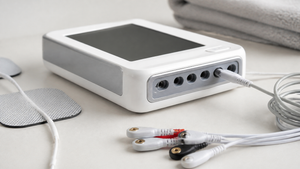

If you've ever opened a TENS or electro acupuncture device and found a tangle of wires, you know the first question isn't about treatment settings—it's about where each connector goes. For a 6-channel stimulator like the Tidesmit 6-Channel Electro Acupuncture Stimulator, the lead wire is the component that makes multiple simultaneous connections possible. Understanding the relationship between those wires and the device's channels can help you avoid error lights, inconsistent stimulation, and wasted electrodes.
But channels and lead wires are not the same thing. A channel is an independent output port that delivers a distinct electrical pulse. A lead wire is the physical cable that carries that pulse from the port to the electrode—and in some cases, a single lead wire can split into multiple branches, each feeding a separate electrode pair. The Tidesmit unit's six channels mean you can place electrodes in several areas at once, but the setup only works if the lead wire matches both the device's output socket and the electrode connectors.
What Are TENS Unit Lead Wires and Channels?
Lead wires are the cables that link a TENS or electro acupuncture unit to the electrodes placed on the skin. They end in a plug that fits the device's output port and a connector that attaches to the electrode—commonly a pin or snap style. According to Biomed Plus, lead wire compatibility depends on both the connector type and the number of channels the device supports. A broken or poorly seated wire can cause inconsistent current delivery, leaving you with an erratic sensation instead of the steady stimulation you expect.
Channels, on the other hand, are the independent output circuits on the unit itself. Each channel can deliver a separate electrical pulse, allowing you to treat different body areas at the same time or adjust intensity for each location. A 6-channel unit like the Tidesmit stimulator has six such ports, and a multi-channel lead wire is often used to connect multiple electrode pairs to a single device output. This doesn't increase the number of independent channels; it simply splits one channel's signal across several electrodes. The wire itself may have a quad-socket plug at the device end and four dual-pin connectors for the electrodes, as seen in some replacement leads.
How Multi-Channel TENS Units Work: The Evidence
The idea behind transcutaneous electrical nerve stimulation (TENS) is straightforward: low-voltage electrical currents are delivered through the skin to stimulate nerve fibers. The 2025 Ultimate Guide to TENS Units explains that this can help modulate pain signals, possibly by activating the "gate control" mechanism—where the sensation of the electrical pulse competes with pain signals traveling to the brain—or by triggering the release of endorphins, as noted by Dr. William Teller of Stanford University. Multi-channel units extend this concept by letting you place electrodes on multiple pain sites simultaneously, or even run different pulse patterns on each channel.
But the evidence for pain relief is mixed and heavily dependent on the condition. A 2017 study on temporomandibular joint disorder (TMJ) found TENS more effective than Naproxen, while a New England Journal of Medicine study reported that TENS was no better than placebo for chronic low back pain. A 2010 trial on carpal tunnel syndrome showed some benefit, and a 2014 review of acute and chronic pain indicated modest improvements for certain patients. A 2015 study on arthritis observed about a 50% success rate. In short, the data doesn't point to a one-size-fits-all solution. More channels don't necessarily improve outcomes—they just give you more placement options, and the response varies from person to person.
Risks and Precautions When Using TENS Lead Wires
TENS therapy is not for everyone, and the lead wires themselves can introduce risks if they’re damaged or misused. The TENS7000 guide clearly states that electrodes should never be placed on the front of the neck, over the heart, or on the face, and that use during pregnancy requires a doctor's consultation. People with pacemakers or epilepsy should also seek medical advice before using any TENS unit. These aren't casual warnings—the neck and face areas carry sensitive structures where stimulation could interfere with breathing or heart rhythm.
Worn or frayed lead wires can cause current fluctuations that feel like sudden jolts or weak spots, and they may irritate the skin. Inspect the wires regularly, especially where they bend near the connector. Pain relief duration after a session can range from as little as 5 minutes to up to 24 hours, according to the source, so don't expect a universal immediate result. If you notice inconsistent output or redness under the electrode, check the wire connection first—it's often the simplest fix.
Practical Guide to Connecting and Using TENS Lead Wires
Start by matching the connector type on your lead wire to the device's output socket. Common styles include quad-socket plugs (found on many clinical stimulators) and standard pin jacks. The electrode end typically uses either a metal pin that pushes into the electrode pad or a snap connector. A secure fit is non-negotiable: if the plug wiggles, you'll get intermittent stimulation. Once connected, gently tug the wire near the plug to confirm it's seated.
For multi-channel setups, it helps to label or color-code the wires. You can use small wire markers or even colored tape to keep track of which lead goes to which body area. This is especially useful when you're adjusting intensity on the device—you'll know instantly which channel you're tweaking. Always use the lead wires recommended by the manufacturer. A generic wire might fit the socket but could have a different pinout or resistance, leading to unpredictable output. The Biomed Plus catalog emphasizes that specific lead wires are designed for particular units, and mixing brands can void warranties or damage the device.
Spotlight: Tidesmit 6-Channel Electro Acupuncture Stimulator Lead Wire
A multi-channel lead wire designed for electro acupuncture stimulators, the Tidesmit 6-Channel Electro Acupuncture Stimulator TENS Unit Lead Wire is a replacement or accessory component that connects to the device's six output channels. It allows simultaneous needle or electrode connections across multiple acupuncture points, which is common in protocols that use paired points. The wire typically uses a quad-socket to dual-pin configuration, so you'll need to verify that your device and electrodes match that connector type. Follow the instructions in your device manual—improper connection can lead to uneven current distribution. This lead wire is not a universal fit, so check the manufacturer's compatibility list before purchasing.
Frequently Asked Questions About TENS Lead Wires and Channels
Can I use a 6-channel lead wire on a 4-channel TENS unit?
It depends on connector type and device design. 6-channel lead wires are often built for specific 6-channel devices, and plugging them into a 4-channel unit may require an adapter or may not be electrically compatible. Check both the device manual and the wire's pinout before connecting.
How do I know which lead wire fits my TENS device?
Inspect the device's output socket—quad-socket, pin, or snap—and the electrode connection style. Match the wire's plug to the socket and the wire's electrode connectors to the pads you use. The manufacturer's website or manual usually lists compatible lead wire models.
What is the difference between single-channel and multi-channel lead wires?
Single-channel wires connect one electrode pair to one device output. Multi-channel wires split from a single plug into multiple branches, each terminating in a connector for an electrode pair. This can reduce cable clutter but doesn't create additional independent channels.
Do more channels mean better pain relief?
Not necessarily. More channels offer flexibility in electrode placement, but the evidence for TENS effectiveness is mixed. A New England Journal of Medicine study found it no better than placebo for back pain, while others show benefit for specific conditions. Pain relief varies by individual.
