
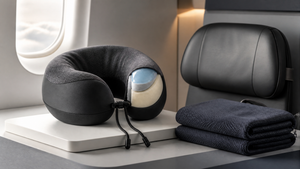

Board a long-haul flight, and the familiar dread sets in: you know you'll nod off, but your head will inevitably drop forward, jolting you awake just as you drift off. The Tidesmit 24-Position Memory Foam Travel Neck Pillow tries to break that cycle with a design that puts adjustability at the center. Instead of a one-shape-fits-all cushion, it offers 24 distinct ways to shape the foam, aiming to keep your head stable whether you lean against a window, slump forward, or sit upright in a middle seat.
That’s a big promise, and the travel pillow market is full of options that fall short. So the question isn’t just whether this pillow adjusts—it’s whether that adjustability actually solves the real-world problems of chin drop, sideways tilt, and the loose fit that makes most pillows useless after a few minutes.
Verdict: Is the Tidesmit 24-Position Pillow Worth It?
The core promise is straightforward: adjustable support to prevent the head from dropping during upright sleep. The 24-position design is built for travelers who have tried rigid pillows that push the head forward or floppy ones that collapse. By letting you shape the memory foam to lock under your chin, cradle the side of the neck, or fill the gap between your shoulder and the headrest, the pillow addresses the most common failure points—chin drop and sideways tilt—in a way that fixed-shape pillows can’t.
The trade-off is complexity. All that adjustability means the pillow isn’t a grab-and-go solution; you’ll need to experiment to find the configuration that works for your seat and body. Some users may find the memory foam bulkier than a simple inflatable, and the multiple positions can feel overwhelming if you just want to stuff something behind your neck. But for those who consistently struggle to keep their head upright, the design offers a level of customization that few travel pillows match. Skip it if you prefer a soft, unstructured pillow or need ultralight packing—buy it if you’re tired of waking up with a sore neck and are willing to tweak the fit.
Who It's Best For
This pillow is aimed squarely at the traveler who can’t seem to find a neck pillow that actually keeps their head from lolling. If you’re an economy-seat side sleeper who leans against the window, the asymmetric shaping options can brace your head against the surface. Upright sleepers in middle seats will appreciate the ability to build up support under the chin to counteract forward drop. The adjustability also helps if you’ve found other pillows too loose—the memory foam holds its shape once you mold it, so it doesn’t collapse under pressure.
On the other hand, the pillow isn’t for everyone. If you prefer a very soft, almost formless pillow you can squish into any position, the memory foam’s supportive structure might feel overbuilt. Ultralight travelers who count every ounce and use an inflatable for its packability may find this pillow too bulky. And if you rarely experience chin drop or sideways tilt and just want a simple cushion, a less adjustable option might be all you need without the added setup.
Key Features: 24 Positions, Memory Foam, and Neck Support
The defining feature is the 24-position adjustability. According to FLOWZOOM, a travel pillow expert, the pillow can be bent, twisted, and locked into two dozen configurations that target different support angles. This means you can create a high chin rest to prevent forward head drop, flatten the pillow for a shallower neck cradle, or angle one side to brace against the seat back. The goal is to let you customize the support so your head stays aligned with your spine instead of tilting sideways or falling forward.
The memory foam itself is slow-rebound, which means it molds to the contours of your neck and jaw under pressure and then gradually returns to shape. This property helps reduce the pressure points that can develop with stiffer pillows. It also retains its molded form during use, so you’re not constantly readjusting.
The design specifically targets chin drop and sideways tilt—two of the biggest enemies of in-flight sleep. By allowing you to position thicker sections under the chin or along the side of the neck, the pillow can resist the gravity that pulls your head forward or sideways. Additional details include a removable cover for washing, a carrying case, and a 100-day trial period. Shipping within Europe takes 3-5 days, which may be a practical consideration for some buyers.
How It Compares to Tidesmit's DREAM, AIR, and COMFY Models
The 24-position pillow offers maximum adjustability, but Tidesmit’s other models cater to different preferences. Here’s how they differ.
Tidesmit DREAM Pillow: Balanced Support Without the Adjustment Complexity
The DREAM is a traditional memory foam travel pillow, not adjustable in the same way as the 24-position model. It provides balanced support right out of the box, which may appeal to travelers who don’t want to fuss with positioning. The trade-off is less customization for chin and side support—you get a familiar, consistent shape rather than the ability to tweak every angle. For someone who simply wants a reliable memory foam pillow without the learning curve, the DREAM is a straightforward alternative.
Tidesmit AIR Pillow: Inflatable Convenience vs. the Rigid Inflatable Stereotype
The AIR is inflatable, using a one-way valve for easy inflation and deflation. That makes it highly packable—it can compress to a fraction of the size of the memory foam models. Where many inflatable pillows feel rigid and unnatural, the AIR is designed to be softer and more forgiving. However, it sacrifices the memory foam feel and the precision of the 24-position system. You can adjust firmness by adding or releasing air, but you won’t get the same targeted chin or side support. The AIR suits travelers who prioritize ultralight portability and don’t mind a slightly less structured feel.
Tidesmit COMFY Pillow: Ready-to-Use Comfort with Memory Foam Simplicity
The COMFY is another memory foam option, likely similar to the DREAM but with its own design focus on ready-to-use comfort. It lacks the 24-position adjustability, so it may not provide the same level of targeted chin and side support. For travelers who prefer a classic pillow shape and don’t experience severe head-drop issues, the COMFY might be a sensible choice. It’s a straightforward memory foam pillow that delivers comfort without any configuration, appealing to those who just want to unclip and sleep.
Trade-offs and Potential Drawbacks
Even the most thoughtfully designed travel pillow can’t solve every problem. Common pitfalls like a loose fit, head still falling forward, or a thickness that pushes the head away from the seat are inherent to the category. The 24-position design tries to mitigate these by letting you lock the pillow into a shape that fits your specific seat and body, but no pillow can guarantee a perfect fit for every person and every airplane chair.
The high adjustability itself might be a drawback for some. If you’re the type who wants to unpack and be done, the multiple positions could feel like a chore. The memory foam, while supportive, may retain heat in warm cabins, and the pillow’s bulk might be noticeable if you’re used to an inflatable. These aren’t failings unique to this pillow, but they’re worth considering before you buy.
How to Use Your Tidesmit Pillow for Better Sleep
Getting the most from the 24-position design means experimenting. To prevent chin drop, try positioning the thicker section under your chin or the front of your neck, depending on how much your seat reclines. If you’re leaning against a window, an asymmetric shape—with one side flatter and the other built up—can brace your head against the surface and reduce sideways tilt.
Pair the pillow with the seat headrest for maximum stability: adjust the pillow so it fills the gap between your shoulder and the headrest, then let the memory foam settle. During the flight, small tweaks can help maintain comfort as your posture shifts. The pillow isn’t a set-it-and-forget-it solution; it rewards a bit of fiddling, especially if you’re someone who usually wakes up with a crick in your neck.
