
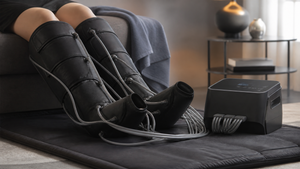

Recovery tools for tired legs have moved from foam rollers and ice baths to devices that use rhythmic air pressure. One approach is the air compression leg massager, which wraps around the calves and feet and uses inflatable chambers to squeeze and release. The Tidesmit 24-Chamber Leg Compression Massager Recovery Device is one of these, designed with a high number of chambers to distribute pressure along the leg. This article looks at how such devices work, the features commonly reported, and where they fit among other recovery methods.
What Is a 24-Chamber Leg Compression Massager?
An air compression leg massager uses a sleeve or wrap fitted with multiple inflatable air chambers. The device pumps air into these chambers in sequence, creating a wave of pressure that moves up the leg. The number of chambers matters because more chambers can spread the pressure more evenly, potentially covering a larger area without gaps. A 24-chamber design, like the one on the Tidesmit device, places many small air pockets along the leg—from the feet up to the calves—so the compression doesn’t concentrate in just a few spots.
Tidesmit 24-Chamber Leg Compression Massager Recovery Device
The Tidesmit model is positioned as a post-workout recovery tool. Its 24 inflatable chambers wrap around the feet and calves, and the product name suggests it’s meant to be used after exercise or long periods of activity. While the specific pressure levels and modes aren’t listed in the same source that details similar devices, the chamber count itself points to a design that tries to follow the contours of the leg closely. The device sits in a category where people often use it while sitting or lying down, letting the automated inflation cycle do the work.
How Air Compression Leg Massagers Work
The basic mechanism is an inflation-deflation cycle. The device’s pump fills the chambers with air, then releases it, over and over. According to FoFo Medical’s description of air compression therapy, this rhythmic pressure is meant to mimic the natural pumping action of muscles—the way your calf muscles contract and relax when you walk, which helps move fluid. An air compression massager doesn’t vibrate or roll. Instead, it squeezes from the outside in, applying pressure in a sequence that often starts at the foot and moves upward. That sequence can feel different from a massage gun or a foam roller because it’s more like a sustained, moving squeeze than a percussive hit or a deep knead.
The source notes that the pressure can be adjusted across different intensity levels, and the typical session lasts between 15 and 30 minutes. Many devices include an automatic shut-off after a set time—often around 20 minutes—so you don’t have to keep track. The point is to let the machine do the repetitive work that your muscles would normally do when you’re moving, which is why it’s often used during rest periods, not during activity.
Key Features and Specifications Reported for Leg Compression Devices
Specifications can vary widely between models, but several features appear in listings of air compression leg massagers. One deal featured on Hip2Save described a device with 2 massage modes and 3 intensity levels, a remote control, and a calf wrap extension that fits up to 28.5 inches. The same listing noted a 20-minute automatic shut-off, though the source also mentions that sessions can run between 15 and 30 minutes. These numbers aren’t unique to one brand—they’re often seen in the product category. A separate FoFo Medical page describes a system with multiple intensity settings and optional extension wraps for larger calves, which addresses a common fit issue.
A remote control can make the device easier to use when you’re already settled in a chair, and extension wraps mean the massager can accommodate a wider range of leg sizes. The automatic shut-off is a practical detail, especially for people who might fall asleep during a session—a concern that turns up in user comments. Some source-reported certifications, like ISO, CE, and FDA, appear on the FoFo Medical product listing, but those are tied to that specific OEM system, not to every air compression massager on the market.
Usage and Fit Considerations
Getting the wrap to sit correctly matters more than the number of modes. The calf wrap needs to cover the muscle without being so tight that it pinches before the device even inflates. The Hip2Save deal mentions a calf wrap extension up to 28.5 inches, which suggests that some devices are built to handle larger legs, but the fit will still depend on individual shape. The automatic shut-off—often at 20 minutes—means you can set it and not worry about overuse, though the source reports that sessions typically last 15 to 30 minutes. That’s long enough to feel the pressure cycle a few times, but not so long that it becomes uncomfortable.
Placement is straightforward: the foot part goes over the foot, the calf wrap sits around the calf. The remote control, if included, lets you change intensity or mode without bending over. The device runs while you’re seated or lying down, so it’s not meant for walking around. That’s more of a design observation than a safety warning—it’s simply how air compression wraps work.
Common Use Cases and Source-Reported Pain Points
The Hip2Save article collects user comments that paint a picture of why people reach for these devices. One person mentioned difficulty sleeping because of leg discomfort, another talked about leg heaviness after a long trip, and several pointed to post-workout soreness. The FoFo Medical source also lists scenarios like tired legs from standing or sitting, fluid retention, and general fatigue. None of these are medical diagnoses; they’re the everyday discomforts that come with being on your feet all day or pushing through a hard workout.
What stands out in the user comments is the phrase “leg heaviness.” It’s not sharp pain, but a dull, weighted feeling that can make it hard to relax. The air compression massager, according to the source, applies rhythmic pressure that may help reduce that sensation. The device is often used in the evening, after a long day, and users report that the automatic shut-off lets them drift off without leaving the machine running.
Air Compression vs Other Recovery Methods
Air compression therapy isn’t the only way to address tired legs, but it works on a different principle than most other methods. The table below draws on the FoFo Medical comparison context to lay out how each technique functions, where it’s typically used, and what limitation is commonly reported.
| Recovery Method | Source-Reported Mechanism | Common Use Scenario | Reported Limitation |
|---|---|---|---|
| Air compression therapy system | Rhythmic inflation and deflation of chambers mimics muscle pumping action | Post-workout, after long periods of standing or sitting | Fit varies; may not cover all leg sizes without extension wraps |
| Physical rolling pressure | Direct pressure from a roller or ball on soft tissue | Self-massage of specific muscle knots | Requires active user effort; can be painful on tender areas |
| Professional pressotherapy system | Sequential compression via a multi-chamber garment, often in a clinical setting | Lymphatic drainage, post-surgery recovery | Typically only available in professional settings; higher cost per session |
| Electric vibration massager | High-frequency oscillation or percussion on muscle surface | Warm-up, spot treatment of tight muscles | May not provide sustained compression; can be noisy |
| Compression socks | Graduated static pressure from ankle to calf | During long flights, daily wear for leg swelling | No dynamic movement; pressure is constant, not rhythmic |
Air compression sits between the passive, constant squeeze of compression socks and the focused, hands-on approach of rolling or vibration. It doesn’t target a single knot—it moves along the leg in a cycle. That’s a useful distinction for anyone deciding what kind of recovery tool fits their routine.
