
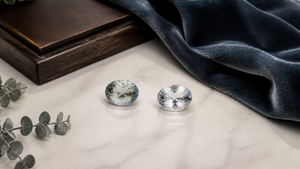

Choosing a precious stone often starts with a single question: natural or lab‑created? The answer isn’t always obvious, but the decision gets easier once you know what each type actually offers. Sellers like Gems N Gems categorize loose stones into three broad groups—natural, lab‑created, and cubic zirconia—and that simple split mirrors the priorities most buyers bring to the table.
Some want the geological backstory of a stone formed over millennia. Others care more about size, color, and clarity at a predictable price. This guide walks through the trade‑offs without pushing one option over the other, so you can pick the stone that fits your own taste, budget, and beliefs.
The Natural vs. Lab-Created Dilemma
The tension between rarity and consistency is real. A natural Tanzanite carries the weight of its origin—it was mined from a single location and took millions of years to form. A lab‑created hydrothermal Colombian emerald, on the other hand, can be grown in weeks and look every bit as vivid. Both are “precious” in the eyes of many buyers, but they appeal to different sensibilities.
For some, the value lies in perception. A natural gem may feel like a store of heritage or a future heirloom, even if its price tag is higher. Lab‑created stones sidestep the mining footprint and offer fewer inclusions for the same carat weight, which can make them a pragmatic choice for an engagement ring or a statement pendant. The right pick hinges on what you’re really after—a slice of Earth’s history or a precisely engineered piece of beauty.
Key Differences Between Natural and Lab-Created Stones
Origin, physical traits, and even the beliefs people attach to gemstones all play a role in the natural vs. lab‑created conversation. Understanding each layer helps you separate what’s measurable from what’s personal.
By Origin: Mines vs. Labs
Natural stones are pulled from the ground, often from locations that give them their name—like Colombian emeralds or Tanzanian tanzanite. Their formation is slow, chaotic, and irreversible. Lab‑created stones, by contrast, are grown in controlled environments that mimic the Earth’s heat and pressure. According to Gems N Gems, methods include Czochralski pulling for rubies and sapphires, hydrothermal growth for emeralds, and chemical vapor deposition (CVD) for diamonds.
The difference in timescale is stark. A natural stone’s journey can span eons; a lab‑grown one arrives in months. That doesn’t change the crystal structure, but it does change the story. A lab‑created sapphire looks identical to a mined one under a loupe, yet its origin makes it a different kind of treasure—one that a buyer might choose for consistency, or pass over in favor of nature’s slower hand.
Metaphysical Properties: Belief vs. Science
Some buyers seek gemstones for their supposed energetic or astrological properties. MyRatna, for instance, reports that certain stones are associated with planetary influences and can be worn for healing or spiritual benefit. These claims are part of a long cultural tradition, and many people find meaning in them.
It’s worth stating clearly: no scientific evidence validates astrological or energy-based gemstone use. Whether you follow that path is a matter of personal belief, not a measurable property of the stone. A natural ruby and a lab‑created one will have the same chemical fingerprint, but the perceived astrological value often rests solely on the natural stone—a perspective that MyRatna’s approach reflects.
Which Stone Fits Your Needs?
Picture your goal. A tight budget and a craving for a large, clean stone push many buyers toward lab‑created options. If you’re chasing a 5‑carat blue sapphire with top clarity, a lab‑grown Czochralski stone can deliver the look without the natural premium. A student setting a birthstone into a ring might prefer a lab‑created stone for its affordability and predictable quality.
If astrological or cultural tradition matters, natural stones often hold the weight. MyRatna’s listings, for example, emphasize the importance of natural origin for astrological purposes, and some buyers feel that a mined stone carries a unique energy—even if science can’t measure it. For those who view their purchase as a long‑term asset, natural stones may also feel like a safer bet, though no investment is guaranteed. If you’re still weighing the options, the store’s precious stones collection lets you browse natural and lab‑created stones side by side, so you can compare what’s available at different price points.
Smart Buying: Authenticity, Grading, and Returns
Online gemstone purchases come with a set of fears—Is it real? Will it look like the photo? What if I need to send it back? Sellers that make their grading and guarantees clear can put those worries to rest. Look for terms like AAA, VVS clarity, and DEF color, which Gems N Gems uses to describe its lab‑created diamonds and moissanite. These aren’t universal standards, but they provide a practical shorthand when a seller is consistent.
A return policy is just as critical. Gems N Gems advertises a 30‑day back guarantee, which gives you time to inspect the stone in person. Cooksongold also offers a wide range of gemstones and ships to over 70 countries, signaling a seller that’s built to handle international orders reliably. Neither detail guarantees perfection, but together they suggest a business that stands behind its inventory. When you’re buying loose stones online, that kind of transparency is a better safeguard than any single certificate.
Frequently Asked Questions
Are lab-grown diamonds real diamonds?
Yes, they are. Lab-grown diamonds have the same chemical composition and crystal structure as mined diamonds. Gems N Gems lists CVD diamonds that are optically and physically identical to natural ones, so the distinction is about origin, not authenticity.
Do gemstones actually hold energy?
Some traditions believe they do. MyRatna reports astrological and healing properties for various gemstones, but these claims are not scientifically proven. It’s a belief system, not a measurable effect, and many buyers treat it as a personal or cultural practice.
What should I look for to ensure a gemstone is authentic?
Reputable sellers often use grading terms like AAA, VVS clarity, and DEF color, and back their sales with a return guarantee. Gems N Gems, for example, advertises a 30‑day back guarantee and clearly states its grading specs. These details, along with a seller’s track record, help you buy with confidence.
