
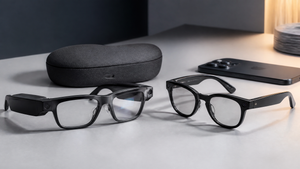

AI-powered smart glasses are moving from novelty to everyday tool, packing features that go far beyond hands-free selfies. Two models carving out distinct niches are the Inmo GO3 and the Meta Ray-Ban glasses. Each one takes a different path to usefulness, and the right choice hinges on what you actually want to do with them.
According to a recent comparison by Geeky Gadgets, the Inmo GO3 leans heavily into display-driven productivity and accessibility, while the Meta Ray-Ban bets on audio quality, camera smarts, and app integration. This guide walks through those differences so you can decide which pair earns a spot on your face.
Why Compare Smart Glasses in 2024?
Smart glasses aren't just a single category anymore. The feature set that makes sense for a daily commuter who needs maps in their line of sight is very different from what someone wants for listening to music, taking calls, and capturing quick video clips. The Inmo GO3 and Meta Ray-Ban illustrate that split perfectly. One projects visual information directly over the real world; the other keeps you connected through audio and a camera while looking like a regular pair of shades.
The purpose here is practical. As the Geeky Gadgets breakdown makes clear, these two devices prioritize different things—display, camera orientation, battery stamina, and accessibility tools. Understanding those trade-offs upfront can save you from buying a pair of glasses that solves a problem you don't have while ignoring the one you do.
At a Glance: Inmo GO3 vs Meta Ray-Ban
The core trade-off reported by Geeky Gadgets is straightforward. The Inmo GO3 puts a display front and center, with a 30° field of view that's noticeably wider than the 20° field of view on the Meta Ray-Ban. That display shows turn-by-turn navigation and real-time subtitles, making it a tool for staying oriented and connected without pulling out your phone. The glasses also use a hot-swappable 300mAh battery, so you can swap in a fresh cell instead of waiting for a charge—a detail that points toward all-day wear.
Meta Ray-Ban, on the other hand, skips the visual display entirely. Its strengths are audio and camera performance, along with the kind of deep app integration you'd expect from a product that lives in the Meta ecosystem. The glasses handle high-quality sound for calls and music, and the camera can pipe a live view into WhatsApp video calls. They also integrate with the Be My Eyes service, which connects visually impaired users to sighted volunteers. The source notes that the camera's vertical orientation may not appeal to everyone, but the customizable design and audio quality make these glasses a compelling option for anyone who wants a wearable camera and speaker that doesn't look like tech.
Key Differences: Display, Camera, and Battery
The Inmo GO3's display is not a subtle feature—it's the main event. The device projects visual maps and real-time subtitles into your field of view, with a reported 30° field of view that Geeky Gadgets describes as significantly larger than the Meta Ray-Ban's 20°. That extra real estate matters when you're walking through an unfamiliar city and need to glance at a route without breaking stride. For someone who relies on visual cues, the Inmo GO3 essentially turns the air in front of you into a head-up display, while the Meta Ray-Ban keeps everything in your ears.
Camera specs follow a similar split. The Inmo GO3 packs an 8-megapixel Sony HD camera capable of 1080p video recording, and it includes 32 GB of internal memory—enough to capture moments without worrying about cloud uploads. The Meta Ray-Ban, by contrast, shoots at a higher 3K resolution, but the camera sits in a vertical orientation that some users may find awkward for standard photo and video framing. If you're used to landscape shots, the vertical layout is a genuine trade-off, not a minor design quirk. Neither camera is trying to replace a dedicated shooter, but the orientation difference will influence which device feels more natural in day-to-day use.
Battery life is where the Inmo GO3 makes a practical move that changes how you think about wearables. Its 300mAh battery is hot-swappable, and the portable charging case holds extra cells, so you can keep the glasses going on a long day without anchoring to a wall outlet. The source lists a standby time of 120 hours, but real-world usage will vary. Meta doesn't publish detailed battery specs for the Ray-Ban model, so the direct comparison is incomplete. Still, the hot-swap design means the Inmo GO3 doesn't ask you to plan your day around a charging schedule.
Beyond the core specs, each device bundles a few extras that speak to very different priorities. The Inmo GO3 includes directional sound technology and anti-sound-leakage ear tubes, which keep what you hear private and reduce the tinny, open-air audio that plagues many smart glasses. The Meta Ray-Ban leans into connectivity: WhatsApp video calls let you share your point of view in real time, and the Be My Eyes integration turns the camera into a tool for accessibility, connecting visually impaired users with volunteers who can describe their surroundings.
Which Glasses Fit Your Needs? Use-Case Scenarios
The best pair of smart glasses isn't the one with the highest resolution or the longest spec sheet. It's the one that fits into the way you already move through the world. The two profiles below reflect the source's guidance on how the Inmo GO3 and Meta Ray-Ban serve different daily rhythms.
For productivity and accessibility: Inmo GO3
A smart glass designed for hands-free navigation, communication, and all-day wear. The Inmo GO3's projected visual maps address a quiet frustration many people know: the constant head-down glance at a phone screen while walking through an unfamiliar city. Instead of stopping to read a map, you see the route overlaid on the real world, which keeps your attention on your surroundings. For hearing-impaired users, the real-time subtitles and translation tools can turn spoken conversation into text that appears right in the glasses—a feature that the source says can lower communication barriers in everyday situations.
The hot-swappable battery and portable charging case remove the low-battery anxiety that often comes with wearables. You can carry a spare cell and swap it in seconds, which means longer sessions away from a charger. The 32 GB of internal memory and 1080p video recording add a layer of on-the-go documentation, turning the glasses into a discreet way to capture moments without holding up a phone. The anti-sound-leakage ear tubes are a practical bonus, addressing the privacy concerns that arise when your audio bleeds into the space around you.
For entertainment, style, and app connectivity: Meta Ray-Ban
Fashionable glasses with high-quality audio, a capable camera, and deep app integration. The Meta Ray-Ban glasses look like sunglasses, not a sci-fi prop, and the customizable design options let you tailor them to your face and style. The audio quality is a standout: calls sound clear, music has body, and the speakers manage to keep sound directional enough that you won't annoy the person next to you on the train.
The 3K resolution camera captures more detail than the Inmo GO3's 8-megapixel sensor, but the vertical orientation means you'll need to think about framing differently. For WhatsApp video calls, that vertical layout is actually a natural fit, letting you share your point of view without awkwardly tilting your head. The integration with Be My Eyes is a thoughtful touch—the glasses can connect visually impaired users to a volunteer who sees through the camera in real time, offering a kind of remote assistance that doesn't require a phone in hand. The source notes that the lack of a visual display makes these glasses less suited for productivity tasks that demand on-screen information, but for someone who wants to listen to a podcast, take a call, and snap a quick photo without reaching for a device, they hit a sweet spot.
Final Verdict: Which One Should You Choose?
There's no single winner here because the two devices chase different goals. The Inmo GO3 is the choice for anyone who needs a display, long battery life, and tools that support accessibility—projected maps, real-time subtitles, and a hot-swappable battery that keeps the glasses running through a long day. Geeky Gadgets paints it as the productivity and communication pick.
The Meta Ray-Ban excels where audio and camera performance matter most, especially when style and app integration are part of the equation. If you want great-sounding calls, a discreet camera for moments and video calls, and a design that blends into your wardrobe, it's the stronger fit. The source's guidance is clear: think about whether your day revolves around staying oriented and informed, or around staying connected and entertained, and let that answer steer you toward the pair that feels like less of a gadget and more of a natural extension of the way you already live.
