
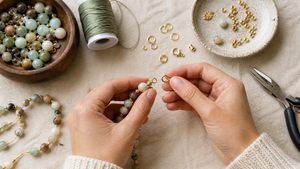

Making your own precious stone necklace turns a handful of beautiful beads into something you can wear every day. It’s a quiet, satisfying project — no specialized tools, no years of practice, just a few well-chosen materials and a little patience. The irregular shapes and soft colors of stones like rose quartz, carnelian, and prehnite mean each finished piece is genuinely one of a kind.
If you’ve ever admired the glow of a semi-precious bead and thought, “I could make that,” you’re probably right. The following tutorial walks you through stringing a necklace from start to finish, with design ideas that use exactly the beads you might already have in your stash or can find at any bead shop. The techniques are simple, and the results feel anything but homemade.
Gather Your Materials: What You'll Need
Before you start stringing, gather everything in one place. The beads listed below are all semi-precious stones, sized to work together comfortably on a single strand. A bead board isn’t required, but a clean towel or a piece of felt helps keep beads from rolling away and gives you a surface to try out arrangements.
- Beads: Banded agate (blue dyed, 10mm, 12mm, 14mm), Carnelian (12mm), Rose quartz (square faceted, 13x10x10mm), Prehnite (nuggets, 18x14x14mm), Tiger eye (12mm), Jade (misty rose, 10mm), Miyuki seed beads (size #11)
- Stringing material: 0.8mm silk beading cord or 0.60mm silk thread
- Findings: 5x0.8mm jumprings, 4mm crimp ends or crimp beads, a clasp of your choice (the Figaro chain necklace, 43.5–46.5cm, is a good match for many designs)
- Tools: scissors, bead stopper or a piece of masking tape, chain-nose pliers (for crimping and opening jumprings)
All of these materials are available from online bead retailers and craft stores. If you’re substituting stones, aim for beads with hole diameters that fit your cord or thread easily — 0.8mm cord passes through a 1mm hole, but a tighter fit can cause fraying over time.
Step-by-Step Guide to Making a Precious Stone Necklace
A good stringing project starts before you pick up the cord. Lay out your beads on a bead board or a dark towel, moving them around until the sequence feels balanced. With stones like the irregular prehnite nuggets or graduated banded agate, you’ll want to step back and look at the arrangement from a distance — small shifts in size and color can change the whole rhythm of the necklace.
Cut a length of 0.8mm silk beading cord or 0.60mm silk thread about 15–20cm longer than your desired finished length. This extra gives you room to tie knots and attach the clasp. Silk thread works beautifully for smaller, lighter beads like rose quartz or seed beads; the thicker cord holds up better with chunkier stones like prehnite or agate. Secure one end with a bead stopper or a small piece of tape so the beads don’t slide off while you work.
Slide the beads onto the cord in your planned order. If you’re using seed beads as spacers, thread them between the larger stones to create a gentle, even rhythm. Take your time — no one will notice the extra five minutes, but they will notice an uneven gap. When you’ve strung all the beads, remove the stopper and check the layout one more time before attaching the findings.
To add a clasp, thread a 5x0.8mm jumpring through the loop at the end of your cord or through a crimp end. If you’re using crimp beads, flatten them gently with chain-nose pliers, then tuck the cord tail back through the last few beads for a clean finish. Knotting the cord ends (a surgeon’s knot works well) and adding a dab of clear nail polish or jeweler’s glue can add security. The Smyks guide to DIY necklaces with semi-precious stones offers clear illustrations of several stringing and finishing techniques, including how to hide cord ends inside crimp covers.
Trim the excess cord close to the knot or crimp, leaving just a tiny tail. Give the necklace a gentle tug test — not a brutal yank, but enough to confirm the clasp won’t open under normal wear. Run your fingers along the strand to feel for any rough spots or overly tight sections. Make a small adjustment now, and you’ll avoid a bead popping off later.
Design Ideas for Your Precious Stone Necklaces
One of the quiet pleasures of working with semi-precious stones is how differently each type behaves on a strand. The same simple stringing technique produces a polished, almost delicate piece with faceted rose quartz, then turns rustic and organic with a handful of prehnite nuggets. The Smyks source highlights just this kind of versatility, showing how switching beads can completely change the mood of a necklace. The ideas below use the stones you gathered earlier; each one leans into the natural character of the material.
Banded Agate (Blue Dyed) Single-Strand Necklace
A single strand of blue dyed banded agate creates a cool, layered look even without any other beads. The beads come in three sizes — 10mm, 12mm, and 14mm — so alternating them irregularly adds a gentle wave to the profile of the necklace. String them on a neutral silk cord, like a soft gray or beige, and the blue bands seem to float. The variation in diameter keeps the eye moving, and the dyed color gives the stone a consistency you don’t always find in natural agate. This design, inspired by the simple strung necklaces in the Smyks collection, is one of the fastest to put together and still draws the most compliments.
Carnelian Focal Point Necklace
Place one or two 12mm carnelian beads dead center, then flank them with Miyuki seed beads in a color that echoes the orange-red glow — copper, gold, or a translucent dark brown. The seed beads don’t compete with the carnelian; they just frame it. A Figaro chain necklace with its chunky, alternating links makes a fitting companion, and a gold-plated clasp ties the warm tones together. The Smyks source shows how mixing bead sizes and types can turn a single focal bead into a deliberate statement, and carnelian, with its saturated color, does that job especially well.
Rose Quartz Faceted Beauty
The square faceted shape of these rose quartz beads catches light from every angle, giving a soft sparkle that’s more subtle than glitter. At 13x10x10mm, each bead has enough presence on its own, so stringing them on fine 0.60mm silk thread with a tiny knot between each one turns the strand into something almost like a classic pearl necklace. The knots keep the beads from rubbing against each other and add a delicate, old-fashioned rhythm. The Smyks source includes examples of faceted stone necklaces that show how the extra step of knotting changes the whole feel of a piece — it’s more work, but the result is worth it.
Prehnite Nugget Organic Necklace
No two prehnite nuggets are exactly alike. The 18x14x14mm size is a range, not a guarantee, and the soft green color varies from pale celery to a deeper sage. Because of the irregular shapes, laying out the nuggets before stringing is essential — you’ll want to distribute the larger and smaller pieces so the necklace doesn’t lean to one side or feel lopsided against the collarbone. Use the thicker 0.8mm cord and finish with simple, understated closures; a hammered sterling silver clasp or a leather cord end can reinforce the earthy, unpolished feel. The Smyks source offers inspiration for organic gemstone designs that lean into the wabi-sabi of the stones, and prehnite is a perfect candidate for that approach.
Common Mistakes to Avoid When Making Necklaces
Cutting the cord too short is the most common frustration — leaving a generous tail takes the pressure off. A weak knot is another. The cord should be pulled tight enough to hold, but not so tight it kinks or weakens the silk. If you skip a bead stopper, you’ll likely watch half your beads slide off the cord at least once, and that’s a lesson you only need to learn once.
Mismatched bead sizes can create uneven spacing that makes the necklace sit oddly on the neck. When you mix stones, test the layout by holding the strand up to your neckline. A clasp that isn’t fully closed or a jumpring that’s been pried open too wide will fail under mild strain, so give each connection a gentle tug before wearing. Most mistakes are fixable, but catching them early saves time and beads.
Caring for Your Handmade Precious Stone Necklace
Store the necklace flat in a drawer or hanging from a hook to prevent the silk cord from developing permanent kinks. Semi-precious stones generally don’t need much more than a quick wipe with a soft, dry cloth to remove skin oils and dust. Avoid soaking the beads or using jewelry cleaners — the chemicals can dull the polish or damage dyed stones like blue agate.
The silk cord will eventually show wear, especially if you wear the necklace often. You might notice a little fuzziness near the clasp or a slight stretch over time. That’s normal. Restringing a necklace is straightforward, and many people find the second time around goes much faster than the first.
