

Scars tell a story, but many people want that story to fade. After surgery, the incision site goes through months of remodeling, and silicone scar sheets are one of the most studied, non-invasive tools to help the process look its best. The trick is knowing exactly when and how to use them — because starting too early or skipping a step can work against you.
This guide walks through the practical steps, from assessing your incision's readiness to troubleshooting common snags like itchiness or poor adhesion. It draws on clinical guidance and source-reported best practices, not first-hand testing, and it does not replace personalized medical advice from your surgeon.
Before You Start: Is Your Incision Ready for a Scar Sheet?
A silicone sheet applied too soon can trap bacteria, pull off fragile new skin, or worsen the scar you're trying to flatten. Most surgeons advise waiting 2–4 weeks after surgery — until the wound is fully closed, no scabs remain, and any stitches or staples are out. The exact timeline depends on your healing speed and the procedure, so the safest move is to get explicit clearance from your surgeon before touching that first strip.
Why silicone sheeting? The clinical principle is deceptively simple: a thin, semi-occlusive layer traps moisture at the scar surface while delivering gentle, even pressure. This combination, according to a review in the National Center for Biotechnology Information (PMC7949016), creates an environment that can support softer, flatter, less visible scars over time. None of that matters, though, if the barrier goes onto skin that hasn't sealed itself shut.
Choosing the Right Silicone Scar Sheet
The sheet you pick has to fit your scar, stay put, and survive daily wear without causing irritation. Look at three things: dimensions you can customize, a reliable adhesive that doesn't need extra glues, and reusability that makes a months-long routine less wasteful. For flat areas like a tummy tuck incision or a C-section line, sources often prefer sheets over gels — gels reach curves and contours well, but sheets can be easier to keep in continuous contact on a broad surface.
1 Roll = 4cm x 1.5m Silicone Scar Sheets, Self-Adhesive and Reusable
A roll-based silicone scar sheet gives you a 4cm-wide, 1.5-meter-long strip you can cut to fit anything from a short biopsy line to a longer sternotomy scar. It's self-adhesive, so you won't need to layer on medical tape or tacky creams just to keep it in place. Because the manufacturer describes it as reusable, you can wash it and reapply it — more on that below — which stretches a single roll across weeks of use. It's a versatile blank canvas rather than a pre-cut patch, and that flexibility matters when you're trying to get full, even coverage without wasting material.
Step-by-Step: How to Prepare and Apply the Scar Sheet
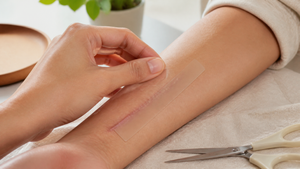
The goal is a clean, bubble-free seal that stays against the skin for most of the day. Start by washing the scar area with mild soap and water, then pat it completely dry — even a trace of moisture will interfere with adhesion, and any leftover lotion or oil can create a slippery film that prevents the sheet from gripping. Next, cut a piece of the sheet so it extends about half a centimeter beyond the edge of the incision on all sides. That small margin ensures the entire scar is covered without letting the sheet lift at the edges when you move.
Peel off the adhesive backing and lay the sheet directly over the dry, clean skin. Press it down gently from the center outward, smoothing the surface to push out air pockets. Avoid stretching the material as you apply it; the idea is conforming contact, not tension that tugs at healing tissue. Once it's in place, you can wear it continuously for 12–24 hours a day, according to guidance from Liv Hospital's surgical resource, as long as you don't experience irritation. If you remove it briefly for cleaning, get it back on as soon as possible — the sheet works by sustained occlusion, not intermittent coverage.
How to Clean and Reuse Your Silicone Scar Sheet
A reusable sheet stops being useful if it gets dirty or loses its stick. Wash it daily with the same mild soap you use on your skin, rinse thoroughly, and let it air dry on a clean, flat surface — a windowsill or bathroom counter works, as long as the area is dust-free. Dr. Lauren Greenberg's guidance for post-surgical patients echoes this: a gentle wash keeps the adhesive side free of oils and skin cells that build up fast. Store the dried sheet in its original packaging, or lay it between two pieces of clean paper, to prevent it from curling or collecting lint. With careful handling, many people get weeks to months from a single piece, but watch for the moment the adhesive weakens — once it won't stay down on its own, it's time to cut a fresh strip.
Mistakes That Can Undermine Scar Sheet Treatment
Even a high-quality sheet does little if a few avoidable errors creep in. The most common one: applying the sheet before the wound is fully closed or while scabs are still present. Doing so can trap bacteria and raise infection risk, and pulling the sheet off early may tear away newly healed skin. Another frequent slip: using creams, lotions, or oils right before application. Any residue forms a barrier between the silicone and the scar, so the sheet slides off. A sheet that's too small — one that doesn't cover the entire scar plus that half-centimeter margin — can leave the edges exposed to movement and friction, which defeats the point of continuous occlusion. Removing the sheet for extended stretches each day also chips away at the total wear time; sources emphasize that consistent, long-duration contact is what gives the tissue the steady moisture and compression it responds to. Finally, if you notice a "spitting suture" — a stitch working its way to the surface — do not cover it. Get it evaluated first, because a foreign body protruding through the skin can become a nidus for irritation under a sealed sheet.
Troubleshooting: Solving Common Scar Sheet Problems
When the sheet won't stick, revisit the basics: even invisible moisture or a thin film of soap residue can sabotage adhesion. Wipe the scar with a clean, dry cloth and clean the sheet itself, then try again. Itchiness is jarring but often temporary; many people notice a faint, prickly sensation during the first few days as the skin adjusts. If it becomes severe, discontinue use — a true silicone allergy is rare, but a rash that develops and persists warrants a call to your doctor, a precaution Lauren Greenberg MD's practice notes takes seriously. Mild redness or irritation right after application can sometimes be eased by starting with shorter wear periods (say, 6–8 hours) and building up slowly. Never apply a sheet over scabs; if the incision hasn't fully healed, wait. For scars on curved areas — a breast lift incision around the areola, for example — even a thin sheet can pucker and lift. In that case, cutting smaller, shaped pieces or switching to a silicone gel might be more practical, though if you can get the sheet to lie flat with minimal tension, you can still use it.
