
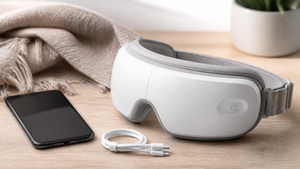

After hours of screen time, the delicate skin around the eyes can feel tense, puffy, and tired. Heated eye massagers are wearable devices designed to offer a gentle, hands-free way to unwind, combining warmth and vibration to soothe the area. The Tidesmit 42°C Thermal Vibration Eye Massage Instrument is one example of this category, bringing together heat and targeted massage in a compact form.
These devices have gained attention from users dealing with eye strain, puffiness, and the general discomfort of modern screen-heavy routines. Reviews from bestreviews.com and ublives.com describe a category that’s grown beyond simple sleep masks—now often including adjustable heat, vibration patterns, and rechargeable batteries.
What Is a Heated Eye Massager?
A heated eye massager is a wearable device that wraps around the head and rests over the eyes, using gentle warmth and micro-vibrations to target the surrounding area. The Tidesmit 42°C model, like many in its class, pairs a steady heating element with pulsating massage nodes. According to product reviews on bestreviews.com, these devices are commonly used for temporary relaxation, easing the heavy feeling that follows long screen sessions, and reducing morning puffiness. They’re not medical tools, but many users find them helpful for winding down. The typical design includes a contoured shell, adjustable strap, and a hypoallergenic lining against the skin—small comforts that make the 15-minute experience feel more intentional than just closing your eyes.
How Does Heat and Vibration Technology Work?
The warmth isn’t random. As ublives.com explains, heat targets the meibomian glands along the eyelids, helping to soften the meibum that stabilizes the tear film’s lipid layer. That layer normally keeps moisture from evaporating too quickly; when it’s disrupted, eyes can feel gritty and dry. The massage side works differently. Vibration is often tuned to stimulate acupressure points around the eye—ublives.com specifically names Zanzhu, Jingming, and Sizhu—which may temporarily relieve tension.
It’s worth separating this from other technologies. Some eye massagers rely on airbag compression that rhythmically inflates around the temples, while others use steam for a hydrating effect. The Tidesmit 42°C and similar heat-and-vibration models skip the moisture and the squeezing, aiming for a lighter touch. The result is a quieter, less intrusive sensation that many users find easier to tolerate. Sources emphasize that these effects are supportive, not curative—a brief pause that some people come to count on at the end of a long day.
Potential Benefits for Eye Strain and Puffiness
User feedback collected by bestreviews.com and ublives.com points to a few recurring themes. Screen-related eye strain is the most common reason people try these devices; after a session, some describe a feeling of reduced pressure and a clearer visual focus. Puffiness around the eyes, especially after a restless night, may also temporarily subside, likely due to the gentle warmth and light compression. Sleep quality is another reported benefit—using the massager as part of a bedtime routine can signal to the body that it’s time to wind down.
For dry eyes, ublives.com notes that some users see a short-term improvement, likely tied to the heat’s effect on the tear film. But these are subjective experiences. The same source underscores that consistent use over weeks seems to produce more noticeable results than a single session, and that benefits vary from person to person. It’s not a replacement for eye drops or a doctor’s care, but for many, it’s a welcome addition to the evening.
Risks and Considerations
Not every face fits every mask. User feedback on bestreviews.com highlights that some models can press uncomfortably against the bridge of the nose or feel too tight overall, putting pressure on the eyeballs. That’s a common complaint—and one that can be avoided by checking for an adjustable nose bridge and a strap that lets you dial in a lighter fit. The Tidesmit 42°C includes a hypoallergenic lining, which helps, but a badly positioned device can still irritate.
Another concern is the potential for fine lines. If the massage is too rough or the vibration too intense, the repeated motion might tug at delicate skin. It’s not a guaranteed outcome, but it’s a reason to start on the lowest intensity setting. And then there’s the built-in music. Some users appreciate the spa-like soundtrack; others find it jarringly loud. Muting it is usually an option, and doing so might actually make the relaxation deeper. These are small trade-offs, but they’re worth knowing before you buy.
Practical Tips for Using a Heated Eye Massager
Most devices, including the E1 model mentioned in ublives.com’s roundup, run on 15-minute cycles. That’s a sensible starting point—long enough to unwind, short enough to avoid overheating or overstimulation. Before you settle in, wipe down the hypoallergenic lining with a soft cloth; a quick clean after each use prevents buildup of oils or skincare residue.
Finding the right position can take a few tries. Loosen the strap more than you think you need, lie back, and let the mask rest lightly against your face. Closing your eyes during the session helps you avoid the slight pressure of the device against your eyelids. If the built-in music is distracting, kill the sound and enjoy the quiet. The absence of noise often lets the warmth and gentle vibration do their work without competition. And if you’re using it regularly, pay attention to how your skin reacts—some people prefer to use it on bare skin, others over a thin layer of moisturizer.
Frequently Asked Questions
Can a heated eye massager help with dry eyes?
Heat can soften the meibum that coats the eye’s surface, temporarily improving the tear film’s lipid layer. Ublives.com discusses this as a common reason users try these devices. The relief is often short-lived, though, and it doesn’t replace medical treatment. If you have persistent dry eye, a doctor’s advice remains the best first step.
Is it safe to use every day?
Most models are designed for daily use within the recommended 15-minute session length. Check the manufacturer’s guidelines for your specific device—some may suggest shorter intervals. If you feel any lingering discomfort, skip a day or reduce the intensity. The rule of thumb is simple: use it as long as it feels good, and stop when it doesn’t.
Can I use it if I wear contact lenses?
It’s best to remove contacts first. The heat and vibration can shift the lens or cause irritation, and the last thing you want is to fish a lens out from under a massager. Pop them out, give your eyes a quick rinse if needed, and then settle in. Most people find the experience far more comfortable this way.
