
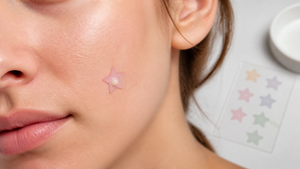

Pimple patches have become a bathroom shelf staple, but the way they work is often oversimplified. They're not a universal fix for every bump, and their benefits depend heavily on the type of blemish and the patch itself. This article draws on dermatologist-reviewed sources to explain what these small stickers can and can't do, so you can decide when to reach for one and when to think about other options.
At their core, most pimple patches are a form of hydrocolloid dressing — a material originally designed for wound care. When applied to an open, seeping pimple, they absorb fluid and create a moist environment, but the effects stop there. Medicated varieties add active ingredients like salicylic acid or tea tree oil, which changes the risk profile and purpose. The question isn't whether they work, but under what conditions they're useful.
What Are Pimple Patches and How Do They Work?
A pimple patch is a small adhesive sticker that sits on top of a blemish. The majority are hydrocolloid dressings, a type of gel-forming material that pulls fluid from an open wound, according to Cleveland Clinic. When a pimple is weeping or has been popped, the patch absorbs excess oil and moisture, turning the sticky area into a white, gel-like spot — a sign it's drawing out discharge, not that it's healing the lesion.
The occlusive barrier that a patch creates can also keep the area from drying out and discourage you from touching it, but the BHSkin guide points out that this moist environment is not a treatment for acne itself. It won't unclog a pore or kill bacteria. Patches are generally split into two categories: non-medicated hydrocolloid-only stickers and medicated versions that include ingredients like salicylic acid, niacinamide, or tea tree oil. The difference matters because it shifts the patch from a simple fluid absorber to something that can potentially irritate the skin, especially if the blemish is already inflamed.
One thing to note is that patches don't create an opening in a closed comedone. If the pimple doesn't have an exit point, a hydrocolloid patch can't pull anything out. The sticky film might sit harmlessly on top, but it won't force a whitehead to the surface. The mechanism is purely physical, not chemical.
Which Blemishes Pimple Patches Can Help With
Sources consistently report that patches are most useful on open, oozing pimples — the kind that have already been lanced or have a visible fluid-filled point. Dermatology of CT explains that these patches work by absorbing the weepy discharge, which can make the blemish look flatter and less obvious over several hours. For a surface-level pimple that has just been popped (carefully), a hydrocolloid patch can act as a seal, keeping the area contained while you sleep.
Deep, cystic acne is a different story. Because the inflammation sits below the surface and the pore isn't open, a patch has little to absorb. The BHSkin guide notes that while medicated patches with microdarts or dissolving ingredients try to penetrate the skin, they still fall short for large, tender nodules. The physical barrier function remains — you might stop picking at it — but the patch won't flatten the cyst.
For sensitive skin, the choice between a plain hydrocolloid patch and a medicated one matters. BHSkin's overview suggests that simple hydrocolloid is often better tolerated because it avoids potential irritants like salicylic acid or tea tree oil. If you're prone to redness or burning from acne treatments, starting with a non-medicated patch is a lower-risk way to test the format. Still, even a basic patch isn't guaranteed to be irritation-free; the adhesive itself can cause a reaction in some people.
Where Pimple Patches Fall Short
Closed pimples, blackheads, and severe acne are not what patches are designed for. Cleveland Clinic underscores that a patch cannot extract a plugged pore — it requires an opening. If you have a forehead full of tiny bumps, a patch won't clear them. Similarly, cystic acne that never comes to a head is unlikely to respond, and the patch may even trap heat and sweat if left on too long.
Patches are also not a replacement for a complete acne management strategy. The Dermatology of CT source emphasizes that they are a spot treatment, not a way to prevent breakouts. Ingredients like adapalene, salicylic acid, and benzoyl peroxide work on a different level — they regulate cell turnover, unclog pores, and reduce bacteria over time. A patch can't deliver that consistent, widespread effect. For very large, painful lesions, dermatologists often use cortisone injections or antibiotic injections to bring down swelling quickly, options that are far more effective than any over-the-counter sticker.
One genuine benefit is that patches can serve as a physical reminder not to pick. But the Cleveland Clinic source cautions that they don't prevent scarring or stop the picking habit. If you have a tendency to dig at your skin, a patch might help you leave the area alone, but the underlying behavior needs its own attention. And once scarring has formed, patches won't reverse it.
Using Pimple Patches: Application and Wear Time
Most manufacturers recommend wearing a patch for 6 to 12 hours, and the BHSkin guide advises changing it once the patch turns opaque white — a sign it has absorbed fluid. There's no benefit to leaving it on longer; the hydrocolloid can only hold so much moisture before it stops pulling. For daytime use, ultra-thin patches that sit flush against the skin are less noticeable, but they still need to be removed before they become saturated.
Application is straightforward: clean the area, dry it thoroughly, and press the patch onto the pimple without stretching the skin. Dermatology of CT notes that the patch should be removed carefully by peeling from the edge to avoid pulling at the skin. It's also worth mentioning that patches are designed for individual spots, not for broad application. They don't replace a cleanser, moisturizer, or treatment routine. If you're using a medicated patch, it's usually best to apply it after your skincare products have dried, but the source doesn't specify a strict order — just that the skin should be free of heavy creams that could prevent adhesion.
Choosing a Pimple Patch: Hydrocolloid, Medicated, and Star-Shaped Options
The patch you pick depends on your skin's tolerance and the type of blemish. Non-medicated hydrocolloid patches are a simpler choice, while medicated ones bring active ingredients with a higher chance of irritation. The BHSkin guide suggests evaluating your skin's sensitivity before reaching for a salicylic acid or tea tree oil patch.
Non-medicated hydrocolloid vs medicated patches
According to BHSkin, plain hydrocolloid patches are often better for sensitive skin because they avoid chemical exfoliants and essential oils that can cause stinging or flaking. Medicated versions might include salicylic acid to help clear pores or tea tree oil for its antimicrobial properties, but these ingredients can be drying. The Dermatology of CT source adds that salicylic acid patches should be used with caution if you're already using other drying treatments, as over-exfoliation can damage the skin barrier. If you're unsure, a simple hydrocolloid patch is a low-commitment place to start, especially for a small, weepy pimple.
Multi-color star patches
The 1400 Pcs Pimples Patches, Multi-color Star Acne Patches,Facial Acne Patches,Concealer Acne Patches,Ultra-thin pack offers a huge quantity of star-shaped stickers in multiple colors. The ultra-thin design and facial positioning suggest they're meant to be worn visibly — perhaps during the day or for a bit of whimsy. With 1400 pieces, it's a bulk option that could last for months. However, the product listing doesn't specify whether these are hydrocolloid or medicated, so checking the packaging before use is important. If they're hydrocolloid-only, they'll work like any other fluid-absorbing patch; if they contain active ingredients, you'll need to consider how your skin reacts to them. The star shape won't affect performance, but the thin profile might make them feel less noticeable under a mask or on the go.
