
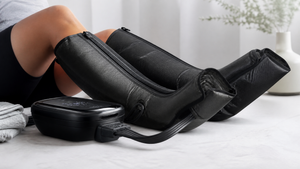

After a long run or a heavy leg day, the feeling of tired, heavy legs can linger. It’s not just soreness — it’s a slow, sluggish sensation that makes you want to prop your feet up and wait. Compression boots, once a fixture in pro sports locker rooms, have moved into the home recovery space, offering a way to massage the legs with air pressure. The Tidesmit Leg Compression Recovery Boots, for example, add heat to the mix, but the core idea is the same: a rhythmic squeeze that moves from the foot upward, helping the body clear out the byproducts of exercise.
A lot of the buzz around these devices comes from athletes who say they feel fresher the next day. But what’s actually happening inside the leg? The technology behind them — sequential pneumatic compression — has been studied for decades, and a cluster of recent research points to effects on circulation, flexibility, and even muscle-tissue markers. The answers aren’t magic, but they’re worth understanding before you sit down and zip in.
What Are Compression Boots and How Do They Work?
Compression boots are inflatable garments worn over the legs (or sometimes the arms) that use air pressure to deliver a massage-like treatment. Unlike a static compression sleeve that provides constant pressure, these boots inflate and deflate in a sequence. The pressure starts at the feet and moves upward, mimicking the body’s natural one-way valves that help push blood and lymphatic fluid back toward the torso. This process is called sequential pneumatic compression.
A well-known brand in this space is NormaTec, which pioneered a method called peristaltic pulse technology. According to Dynamic Sports Medicine, NormaTec systems use dynamic compression cycles that don’t just hold steady — they pulse in a wave-like pattern, which the source describes as a way to aid circulation and support muscle recovery. The same principle applies to consumer devices like the Tidesmit boots, which use a similar sequential inflation pattern. The key difference is that NormaTec units are often found in clinical settings, while home devices like the Tidesmit model bring a pared-down version of that experience to your living room.
Static compression sleeves, by contrast, provide a fixed level of pressure. They’re useful for travel or managing swelling, but they don’t actively move fluid. The dynamic squeeze of boots is what makes them feel more like a massage — and what’s behind much of the research.
The Science Behind Compression Boots
Several studies have looked specifically at the peristaltic pulse compression used in devices like NormaTec, and the results give a hint at why athletes reach for these boots. All of the studies below examined this pattern of compression, not a generic inflatable sleeve, so the findings are most relevant to systems that use a similar upward-moving waveform.
A 2014 study in the Journal of Strength & Conditioning Research found that peristaltic pulse compression of the lower extremity was associated with improved flexibility. The 2015 work in the European Journal of Applied Physiology reported that peripheral conduit and resistance artery function improved after a session, suggesting a short-term boost to how well blood vessels respond. That same year, an Experimental Physiology study showed that this type of compression upregulated PGC-1α and eNOS in human muscle tissue — two proteins tied to cellular energy and blood vessel health. And another 2015 JSCR exploratory study noted that dynamic compression enhanced the pressure-to-pain threshold in elite athletes, meaning they could tolerate more pressure before feeling discomfort, a possible indicator of reduced muscle soreness.
No single study proves that boots will make you recover faster. But taken together, the research points to a few plausible mechanisms: moving fluid through the limb, temporarily improving how arteries function, and triggering molecular changes in muscle. The peristaltic pulse pattern seems to matter because it mimics the body’s own one-way valves, which can become sluggish after intense exercise. It’s a gentle nudge, not a forceful pump — and that’s likely why most people find it relaxing rather than intense.
Safety and Who Should Avoid Compression Therapy
For most people, compression boots are a low-risk way to unwind after exercise. But the squeezing action does have an effect on circulation, so there are a few situations where it’s better to skip them. Dynamic Sports Medicine screens patients for medical history that includes deep vein thrombosis (DVT), blood clots, severe peripheral vascular disease, untreated infections, open wounds, or recent surgical incisions in the treatment area. Anyone with these conditions should avoid using compression boots unless a healthcare provider gives the go-ahead.
The pressure can be adjusted downward, and the experience is generally described as soothing, not painful. Still, if you’re unsure about an underlying issue — like a history of clotting or poor circulation — it’s wise to ask a doctor before using any compression device. The list of contraindications isn’t a long one, but it’s specific. Even a first-stage varicose vein might warrant a professional opinion, since the boosted flow could theoretically aggravate certain vascular problems.
How to Use Compression Boots for Recovery
Sessions don’t need to be daily marathons. For athletes in heavy training blocks, Dynamic Sports Medicine suggests 2–3 sessions per week. That frequency gives the body a chance to respond without overdoing it. The boots inflate in a wave-like pattern, starting snug at the feet and moving up, and you can adjust the pressure to a level that feels firm but comfortable — not a tourniquet.
What you’ll feel is a rhythmic, almost kneading sensation. Many people use the time to read or listen to a podcast. Depending on the device, you can apply the treatment to the legs, hips, or arms. The timing of a session often comes down to personal preference: some like it right after a workout, others before bed to quiet restless legs. The key is consistency — the same way you’d stick with a stretching routine.
Example: Tidesmit Leg Compression Recovery Boots with Heat
For an at-home option, the Tidesmit Leg Compression Recovery Boots – Heated Air Massager brings sequential compression to the consumer market. It uses six massage modes and adds a heating function, which can make the experience feel more like a warm towel wrap. Heat may help muscles relax further, though clinical studies on heated compression specifically are limited. If you’re coming off a cold-weather run or simply want a cozier session, that feature is a practical addition. The device is designed for athletes, but its appeal is really for anyone whose legs feel heavy at the end of the day.
Frequently Asked Questions About Compression Boots
Do compression boots help with muscle soreness?
They may reduce the feeling of soreness. A 2015 JSCR exploratory study found that dynamic compression raised the pressure-to-pain threshold in elite athletes, suggesting less discomfort. Results vary, and the effect on delayed-onset muscle soreness (DOMS) isn’t guaranteed.
How often should you use compression boots?
During heavy training, 2–3 sessions per week is a common recommendation. For casual use, follow the manufacturer’s guidance and pay attention to how your body responds — more isn’t always better.
Can anyone use compression boots?
People with DVT, blood clots, severe peripheral vascular disease, or recent surgical wounds should avoid them. If you have an underlying condition or aren’t sure, a quick check with a healthcare provider is the safest route.
