
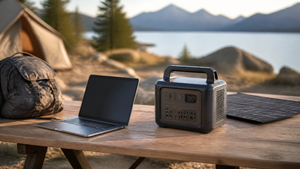

For many digital nomads, the line between a productive workday and a dead battery is the nearest wall outlet. But when the nearest outlet is 50 miles away, portable solar generators become the link between a remote campsite and a functioning office. Unlike gas generators that demand oil changes, fuel management, and engine maintenance, solar power stations operate silently and without exhaust fumes—a point echoed across multiple sources, including populargenerator.com.
We've combed through recent third-party evaluations to highlight the options that best match the nomadic lifestyle. The curated Portable Solar Generators for Digital Nomads collection pulls together the kind of units that can charge a laptop, keep a phone alive, and still fit in a van or trunk.
Why Digital Nomads Need Portable Solar Power
Work-from-anywhere life often means working from places with no power infrastructure. A portable solar generator lets you run a laptop, monitor, and other gear off the sun, without the noise or fumes of a gas generator. According to The Wilderness Lab, the right setup can deliver enough daily charging capacity to keep essential devices alive through a full workday.
The pain point with gas generators isn't just the roar—it's the upkeep. Solar generators skip the engine, the oil, and the fuel canisters entirely. For anyone who's ever tried to troubleshoot a carburetor in a parking lot, that simplicity is a genuine relief. You can browse options that balance portability and output in the Portable Solar Generators for Digital Nomads collection.
The Best Portable Solar Generators at a Glance
The following roundup draws on source-reported testing and comparisons, primarily from The Wilderness Lab's ranking of sub-$400 units, with additional feature context from populargenerator.com and topconsumerreviews.com. Each pick is evaluated for the kind of digital nomad who might rely on it.
| Product | Best For | Source-Reported Strength | Caveat |
|---|---|---|---|
| EcoFlow River 2 | Lightweight laptop and phone charging | 784Wh daily charging capacity; only 7 pounds | Not suited for high-wattage appliances |
| Jackery Solar Generator 300 | Ultra-portable small device charging | Extremely compact; ideal for phones and tablets | Cannot handle high-wattage heating devices |
| EF ECOFLOW DELTA 3 Classic | High-capacity base camp setups | 1024Wh LiFePO4 battery; powers laptops, cameras, small appliances | Heavier build; may be overkill for solo minimalists |
| Allpowers R4000 | Budget-friendly high capacity | Lower-priced brand that performs well in testing | Heavier; support and warranty may be less robust |
EcoFlow River 2: Lightweight for Basic Laptop and Phone Charging
The ultra-portable option for charging everyday devices. The EcoFlow River 2, as detailed by The Wilderness Lab, provides a 784Wh daily charging capacity and weighs just 7 pounds. With a $399 price tag when bundled with a solar panel, it's a lightweight companion for laptops, smartphones, and small USB devices—perfect for short trips or minimal desk setups.
The source ranks it highly for its compact size and ease of use. However, it's not designed to power high-wattage appliances like heaters or power tools. For a nomad who only needs to keep a laptop and phone alive, the trade-off is entirely manageable.
Jackery Solar Generator 300: Ultra-Portable for Small Devices
The pocket-sized generator for phones and tablets. The Jackery Solar Generator 300 earns its place through sheer portability, making it a favorite for minimalists who can charge all their gear via solar panels during the day. The source notes that it's not suited for high-wattage heating appliances, so its domain is strictly small electronics.
While no specific watt-hour capacity is provided in the source data, its form factor speaks to a grab-and-go lifestyle. It's the kind of device you toss in a backpack for a day hike, knowing you'll have a power reserve for navigation and communication.
EF ECOFLOW DELTA 3 Classic: High-Capacity for Power Users
The heavy-duty choice for powering multiple devices and larger gear. The EF ECOFLOW DELTA 3 Classic packs a 1024Wh LiFePO4 battery, making it suitable for laptops, cameras, and even small appliances. The source evaluates its build quality and reliability favorably, positioning it as a base camp powerhouse rather than a daily carry.
Its weight is a factor—this is a station you'd leave at a longer-term setup. For a solo nomad with only a laptop and phone, it may be overkill, but for anyone running a monitor, a Starlink dish, and a camera battery charger, the extra capacity is a safety net.
Allpowers R4000: Budget-Friendly with High Capacity?
A lower-priced brand that offers surprising capacity. The source notes that Allpowers is a brand that actually works, delivering higher capacity without the premium price tag. The R4000 is a value pick for those who need more power but want to keep the budget in check.
The trade-off: it's heavier, so portability takes a hit, and customer support may not match the responsiveness of established brands. If you're willing to accept slightly less polished service, the capacity per dollar is compelling.
Key Differences Between Our Top Picks
The main differentiators are weight, capacity, and intended use. The EcoFlow River 2 and Jackery 300 fall squarely in the light-use category—ideal for laptops, phones, and tablets. The DELTA 3 Classic and Allpowers R4000, by contrast, are built for more demanding setups: multiple devices, small appliances, and longer stays away from a wall outlet.
Solar charging speed also varies, and larger batteries inherently take longer to replenish. The sources don't provide exact charge times, but the principle holds: a 1024Wh battery will need more sun-hours than a 784Wh one. Your choice hinges on whether you're a weekend camper or a full-time off-grid worker.
How to Choose the Right Solar Generator for Your Nomad Lifestyle
Start by listing every device you'll charge—laptop, phone, camera, maybe a CPAP machine—and add up their wattage. Most nomads will find a 500–1000Wh capacity sufficient, and the EcoFlow River 2, with its 784Wh daily capacity, sits right in that sweet spot. Weight is next: a 7-pound unit fits in a backpack; a 60-pound station doesn't.
Battery type matters. LiFePO4 (Lithium Iron Phosphate) batteries, like those in the DELTA 3 Classic and many newer models, offer longer lifespans than standard lithium-ion—a significant advantage for frequent cyclists. The topconsumerreviews.com guide also emphasizes solar input options, so check whether the unit supports a direct Anderson solar connection or requires adapters. The Portable Solar Generators for Digital Nomads collection can help you narrow the field based on these criteria.
Common Questions About Portable Solar Generators
Can a portable solar generator power a laptop all day?
It depends on the generator's capacity and the laptop's power draw. A 500Wh unit can run a 60W laptop for roughly 8 hours. The EcoFlow River 2, with a 784Wh daily charging capacity, can extend that substantially—enough for a full workday and then some, according to source data.
Are solar generators noisy?
Solar generators are nearly silent, unlike gas generators. Some units have fans that click on under heavy load, but the noise level remains far lower than a combustion engine. The source comparisons consistently highlight this quiet operation as a key advantage.
